Japanese Jimny Import Ireland: Converting to Irish Standards - What's Required?
27th Feb. 2026 13 minute read

If you’re thinking about bringing in a Japanese-spec Suzuki Jimny, you’re not alone. Availability of Suzuki Jimny vehicles in Ireland is extremely limited, which drives up demand for imports from Japan. Demand for clean, rust-free imports from Japan has surged across Dublin and the rest of Ireland, making the japanese jimny import ireland market increasingly popular.
Suzuki as a brand is renowned for its reliable cars, ruggedness, and off-road capability, making the Jimny especially desirable among Irish buyers. The Jimny was officially sold in the UK and Ireland, but due to limited supply, importing from Japan is often necessary to secure one. The Jimny is also highly sought after across Europe, where it was homologated to meet European standards, further increasing its appeal and influencing import strategies.
But converting a Japanese Jimny to Irish standards isn’t just about shipping it over and sticking on new registration plates. There are specific legal, technical, and tax requirements you’ll need to meet before it’s ready for Irish roads.
In our experience at The Jimny Co, the process is straightforward when it’s handled properly from the start by our expert team. Here’s what’s actually involved.
Why Import a Japanese Jimny in the First Place?
Japanese-market Jimnys are often in exceptional condition and significantly cheaper than their Irish counterparts, as Japanese used cars tend to depreciate rapidly due to a rigorous inspection system.
They typically have:
Lower mileage, as Japanese cars often have low mileage due to strict vehicle usage regulations and short depreciation periods
Minimal corrosion (thanks to Japan’s strict roadworthiness rules and regular inspections)
Higher spec trims than many Irish-market versions
A well-documented repair history and previous owner details, helping ensure reliability
The Suzuki Jimny is renowned for its compact off-road prowess and exceptional durability, featuring a sturdy ladder frame and 3-link rigid axle suspension with coil springs that enhance its performance in demanding conditions.
In comparison to the Jimny, the Suzuki Vitara provides a slightly larger option for passengers, offering more interior space and comfort. Both vehicles uphold Suzuki's well-known reputation for reliability. While the Vitara is commonly available through dealerships in Ireland and the UK, the Jimny is more frequently imported due to its limited availability locally.
There is a wide range of models and specifications available in Japan, and the auction grading system helps buyers assess the quality of cars and significantly influences the final auction prices of Suzuki Jimny vehicles.
Pre-Purchase Considerations Before Importing
Before you commit to importing a Suzuki Jimny from Japan, it’s essential to do your homework to ensure a smooth and cost-effective experience. Start by thoroughly researching the vehicle’s repair history and mileage—these details are crucial for assessing the Jimny’s reliability and long-term value on Irish roads. Japanese auction houses typically provide comprehensive reports, including the overall grade of the vehicle, which can help you gauge its condition and suitability for import.
Budgeting accurately is another key step. Factor in the purchase price, shipping costs from Japan, customs duty, and the vehicle registration tax (VRT) you’ll need to pay upon arrival in Ireland. Each of these costs can vary depending on the Jimny’s age, model, and condition, so getting a clear picture upfront will help you avoid surprises later.
Consulting with a customs agent or a specialist import company, such as The Jimny Co, can make the process much more manageable. These professionals can guide you through the complexities of customs clearance, tax calculations, and compliance, ensuring your import is both cost effective and fully compliant with Irish regulations. Taking these steps before purchase will set you up for a successful and stress-free import process.
Step 1: Shipping & Customs Clearance in Ireland
Once your Jimny leaves the Japanese port, it’s transported to Ireland (usually via Dublin Port). RORO shipping is the most convenient option for importing a single car due to its ease and simplicity, while container shipping is more cost-effective if you are importing multiple vehicles or purchasing multiple vehicles at once.
When it arrives, it must clear Irish customs. This involves:
Customs declaration handled by a customs agent for convenience
Customs duty (where applicable)
VAT payment
Proof of purchase and shipping costs documentation
Securing the original Japanese Export Certificate and Bill of Lading for customs and registration
Once the vehicle is delivered to Dublin, you are responsible for clearing customs, which requires a customs declaration.
FOB (Free On Board) means the vehicle is delivered to the Japanese port, while other shipping terms may include delivery directly to your destination in Ireland—so it’s important to clarify where your vehicle will be delivered as part of your import logistics.
Revenue rules around vehicle imports are strict, so paperwork must be accurate. You can read more directly on the Revenue Commissioners website for current import guidelines.
At The Jimny Co, we manage this entire stage for our customers, ensuring no surprises or hidden fees.
Step 2: VRT (Vehicle Registration Tax)
Before your Jimny can get Irish plates, it must be registered and VRT paid.
VRT is calculated based on:
OMSP (Open Market Selling Price)
Vehicle category (passenger vs commercial)
CO₂ emissions
You can estimate your costs using the official Revenue VRT calculator by providing your vehicle’s VIN or chassis number.
Most Japanese Jimnys are registered as commercial vehicles here, which can significantly reduce VRT and annual motor tax — ideal for many South Dublin drivers looking for a practical 4x4.
You’ll book an appointment through the NCT centre to complete registration. The VRT inspection confirms vehicle details and assigns an Irish registration number.
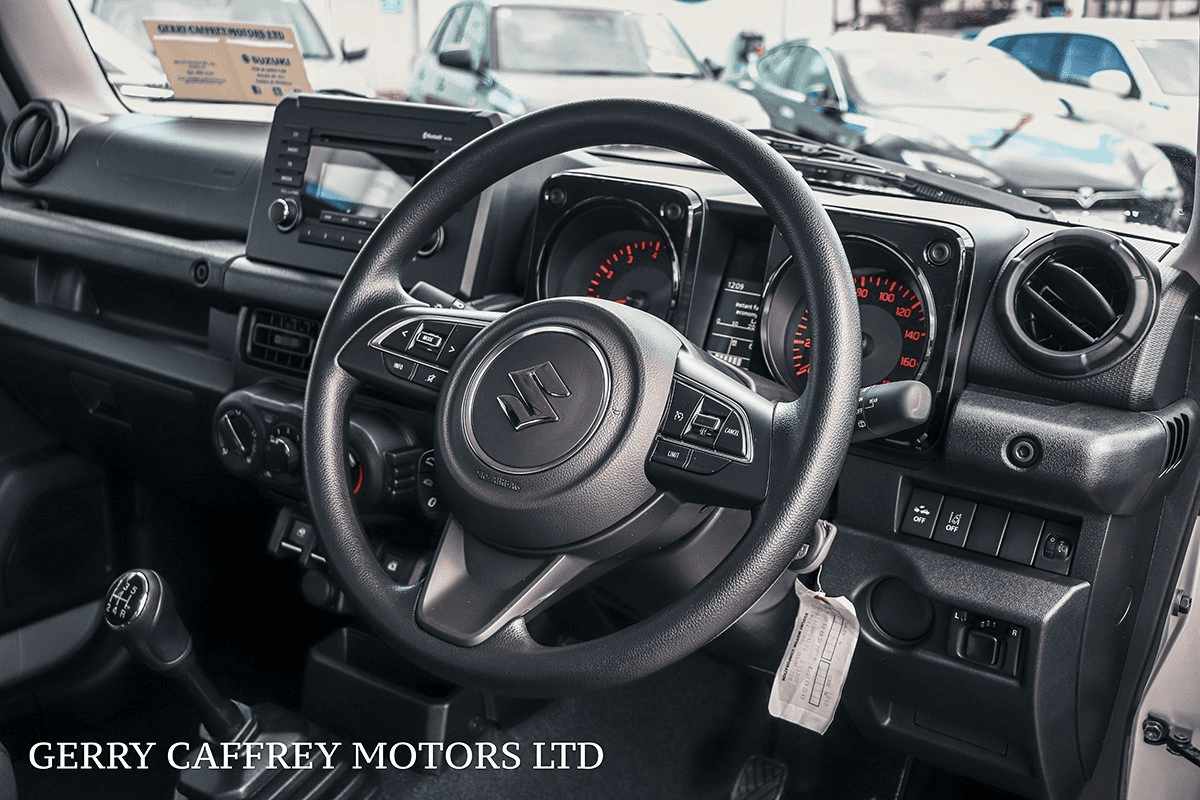
Step 3: Speedometer Conversion (km/h)
Japanese vehicles often display speed primarily in km/h, which is fine for Ireland.
However, if the cluster is mph-only or unclear, it must be converted or adjusted to meet Irish compliance standards.
In most cases with Japanese Jimnys, this isn’t a major issue — but it needs to be checked properly before NCT.
Step 4: Fog Light & Lighting Adjustments
Lighting is one of the most common conversion requirements.
You may need:
Rear fog light repositioning
Headlight alignment adjustment
E-marked lighting compliance
We often see minor adjustments required to ensure the beam pattern suits driving on the left — especially important on dark Irish country roads and during winter months.

Step 5: NCT Compliance
Before you can legally drive your Jimny long-term in Ireland, it must pass the NCT.
The National Car Testing Service ensures your vehicle meets Irish road safety standards.
They’ll check:
Brakes
Suspension
Emissions
Lights
Structural condition
Japanese imports tend to perform well here — particularly because of their typically clean underbodies and overall grade.
Step 6: Insurance Considerations
Insurance companies in Ireland sometimes classify imports differently.
The good news? Japanese Jimnys are widely recognised, and once registered properly, they’re usually straightforward to insure.
It’s always worth checking with your broker early in the process.
For general motoring advice, the AA Ireland offers helpful guidance on imported vehicles.
Step 7: Warranty & Peace of Mind
One concern buyers often raise is warranty.
A privately imported vehicle won’t automatically carry an Irish dealer warranty. That’s where working with a specialist matters.
At The Jimny Co, we supply Japanese imports fully inspected, serviced, and backed with warranty options — so you’re not taking a gamble.
Motor Tax Requirements for Your Imported Jimny
Once your Suzuki Jimny has arrived in Ireland and you’ve paid the necessary Vehicle Registration Tax, the next step is to register the vehicle and secure your new registration plates. A crucial part of this process is understanding and fulfilling the motor tax requirements. In Ireland, motor tax for your imported Jimny is calculated based on the engine size and emissions standards of the vehicle, which can affect your annual running costs.
To estimate your Vehicle Registration Tax and plan for ongoing expenses, the Revenue VRT calculator is an invaluable tool. It allows you to input your Jimny’s details and get a clear idea of the tax you’ll need to pay. Ensuring your vehicle meets Irish emissions and safety standards is also essential for a smooth registration process.
If you’re unsure about any aspect of motor tax or registration, seeking assistance from the relevant authorities or a professional service can help clarify the process and ensure you’re fully compliant. This way, you can enjoy your Jimny on Irish roads with confidence, knowing all legal requirements have been met.
Commercial vs Passenger Registration in Ireland
This is where local knowledge matters.
Registering your Jimny as a commercial vehicle can mean:
Lower road tax
Lower VRT
Practical business use
But it must meet Revenue’s criteria for commercial classification.
In our experience, many buyers in Dublin and Wicklow choose the commercial route for cost efficiency — especially if they’re using the Jimny for work, farming, or off-road use.
Common Mistakes When Importing a Japanese Jimny
We often see buyers run into problems when they:
Underestimate total landed cost, including purchase price, shipping costs, customs duty, and import taxes
Miss VRT timelines (penalties apply)
Buy without proper auction inspection and checking overall grade and repair history
Forget about conversion work or NCT compliance
Importing directly can look cheaper on paper. But once you factor in compliance, risk, and potential hidden issues, it’s rarely as simple as it seems.
Why Work With The Jimny Co?
We don’t just sell Jimnys.
We:
Source directly from Japan’s trusted auctions and dealers
Carry out independent inspections and verify vehicle condition, exterior, and interior grades
Manage shipping options including FOB, container, and roll off (RORO) to ensure cost-effective delivery
Handle customs clearance with a customs agent to assist you
Take care of VRT, NCT centre bookings, and registration
Provide warranty and aftersales support
Offer finance options and accept trade-ins
Is a Japanese Jimny Worth It in Ireland?
Absolutely — when done properly.
They’re compact enough for tight Dublin streets, capable on rural backroads, and surprisingly comfortable for everyday use. With Ireland’s mix of urban traffic, narrow country lanes, and unpredictable weather, the Jimny makes a lot of sense.
But compliance and paperwork matter.
In our experience, the smoothest imports are the ones handled professionally from day one by a dedicated team.
The Future of Japanese Jimny Imports in Ireland
As demand continues to grow, new models are being released regularly in Japan, offering even more options for Irish buyers. Staying connected with the Jimny community in Ireland is a great way to keep informed about the latest releases, import tips, and local events. Whether you’re planning your first import or looking to upgrade, the future looks bright for Japanese Jimny enthusiasts in Ireland.
Thinking about a Jimny import?
Final Checklist for Your Jimny Import
Before you take your newly imported Suzuki Jimny out on Irish roads, it’s wise to run through a final checklist to ensure every step has been completed. Start by verifying all vehicle details, including the make, model, and Vehicle Identification Number (VIN), to confirm they match your documentation. Double-check the purchase price, shipping costs, customs duty, and Vehicle Registration Tax to ensure all payments are accounted for.
Arrange for shipping from Japan, choosing between roll-on/roll-off or container shipping based on your needs and budget, and make sure your Jimny is insured during transit. Once your vehicle arrives at Dublin Port, work with a customs agent to handle customs clearance and pay any outstanding duties or taxes.
After clearing customs, register your Jimny, obtain your Irish registration plates, and book an inspection at an NCT centre to confirm the vehicle’s roadworthiness. Completing this checklist will ensure your Jimny is fully legal, compliant, and ready for the adventures that await on Ireland’s roads.
Our Passion for Jimnys is backed by 35+ years of Suzuki Heritage.
The Jimny Co is a sub-brand of Gerry Caffrey Motors — Ireland’s longest-standing Suzuki dealership.
© The Jimny Co 2025
01 490 1134
106 - 112 Terenure Road North,
Dublin 6W, Ireland, D6WWR13