Suzuki Jimny Grades Japan: The Hidden Differences Between XC vs XL vs XG
9th Oct 2026 13 minute read

If you've been searching for the perfect Suzuki Jimny grades Japan has to offer, you've probably come across three letters that make a surprisingly big difference: XG, XL, and XC.
At first glance, these Japanese Jimny grades look almost identical. They've got the same unmistakable boxy design, compact dimensions, and proper off-road capability, perfect for rough terrain. But look a little closer, and you'll find differences in comfort, technology, safety equipment, and overall value.
For Irish drivers, those differences matter.
Whether you're navigating Dublin city traffic, heading down a narrow country lane, or tackling a muddy trail after a week of Irish rain, choosing the right Jimny trim level can make everyday ownership that bit better and more fun.
At The Jimny Co, we are committed to helping Irish customers with the entire process of sourcing and importing Jimnys directly from Japan. We handle everything from finding the right vehicle and arranging inspections to shipping, VRT, Irish registration, delivery, and warranty.
Here's what you should know before choosing between a Japanese Jimny XC, XL, or XG.
Understanding Japanese Suzuki Jimny Trim Levels
The Japanese domestic market (JDM) offers several Jimny configurations, but the three main grades of the fourth-generation 660cc Jimny, known as the JB64, are XG, XL, and XC.
They're designed for different types of buyers and driving styles.
The XG is the practical entry-level model. The XL adds useful everyday comforts, while the XC sits at the top of the range with additional styling, convenience, and technology features.
One important distinction is that the Japanese 660cc Jimny and the wider 1.5-litre Jimny Sierra aren't the same vehicle. The Sierra, commonly identified by its JB74 model code, has different engine specifications and a wider body.
The Jimny Sierra includes grades JL (Entry) and JC (Flagship), and due to its larger dimensions, it requires standard-car registration in Japan.
When comparing Japanese Jimny specifications, make sure you're looking at the correct model, year, and grade.
Jimny XC vs XL vs XG: What's Actually Different?
The biggest differences between Japanese Jimny grades come down to comfort, convenience, and factory equipment.
All three grades share the same fundamental 660cc turbocharged engine, ladder-frame construction, and part-time four-wheel-drive system, offering excellent fuel economy and power for both urban and off-road use.
The power output for the Kei version is capped at 64 PS and 96 Nm of torque.
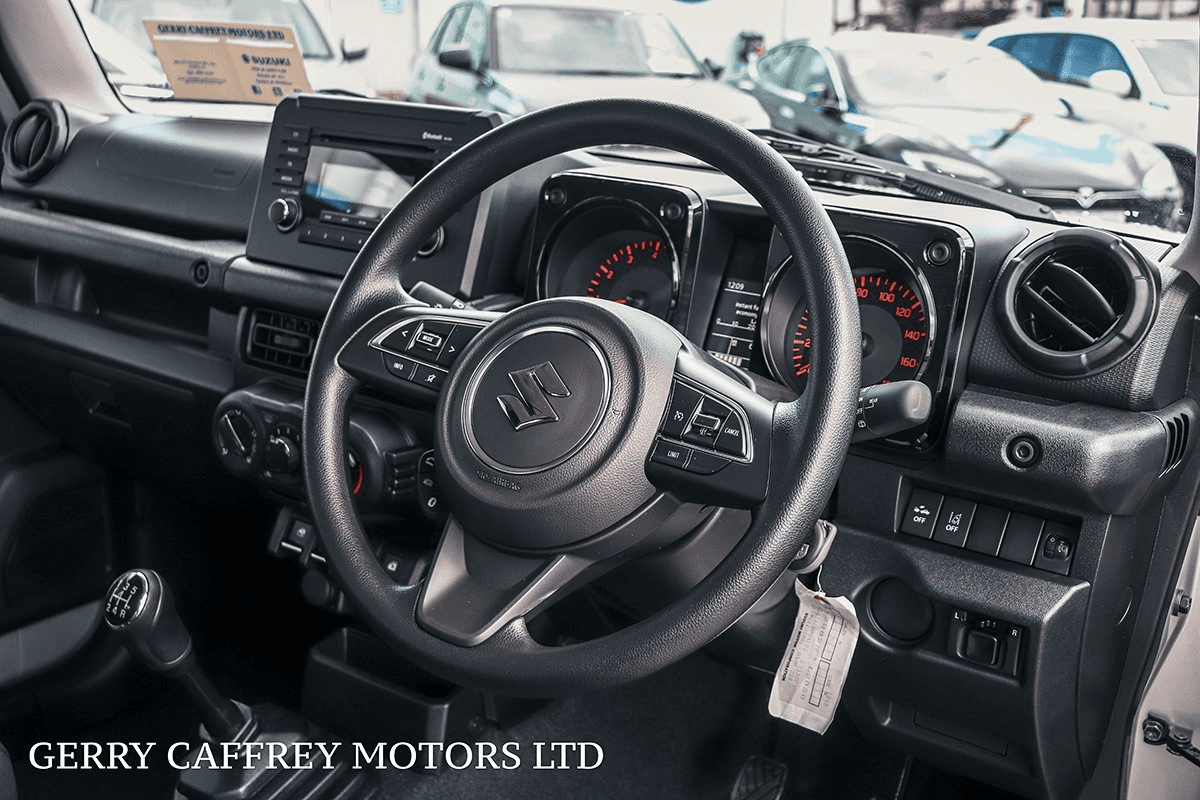
The XG generally comes with manual air conditioning, steel wheels, and simpler interior equipment.
The XL adds automatic climate control, heated front seats, and smart key convenience features.
The XC typically builds on the XL with factory alloy wheels, LED headlights, cruise control, reverse camera, enhanced security features, and additional styling or driver-assistance features.
Exact specifications can vary depending on the production date, optional equipment, and Suzuki's specification updates.
The important thing isn't simply which Jimny has the longest equipment list. It's which features you'll actually appreciate on Irish roads.
Suzuki Jimny XG Japan: The No-Nonsense Choice
The Japanese Jimny XG is the most basic grade, but don't mistake basic for incapable.
Underneath, it retains the rugged ladder-frame construction, low-range transfer gearing, and part-time four-wheel-drive system that make the Jimny so popular with off-road enthusiasts.
What you give up is mainly comfort and convenience equipment.
Depending on the model year, you'll typically find simpler interior trim, steel wheels, manual air conditioning, and fewer premium features.
For someone planning a dedicated off-road build, that can be a real advantage.
If you're going to fit upgraded tyres, suspension components, protective accessories, or different wheels anyway, paying extra for factory styling features might not make sense.
In our experience, the XG is worth considering when the priority is a straightforward, capable Jimny rather than a fully equipped daily driver.
For Dublin commuters, however, it's worth thinking carefully about the equipment you'll miss during winter mornings and regular motorway journeys.
Suzuki Jimny XL: The Sweet Spot for Everyday Driving
For many Irish buyers, the XL offers an appealing balance between price, practicality, and comfort.
You still get the same underlying off-road engineering as the XG, but with a more comfortable cabin and useful everyday features.
Automatic climate control, heated front seats, and keyless convenience features are particularly welcome in Ireland.
Picture a cold January morning in South Dublin. You're heading towards the M50, the windscreen is covered in condensation, and the temperature is barely above freezing.
That's when a few extra comfort features start to feel less like luxuries.
The XL can also be an attractive choice for customers who want to personalise their Jimny with aftermarket alloy wheels, roof racks, all-terrain tyres, or other accessories.
You get much of the comfort of the top-spec model without necessarily paying for every factory upgrade.
Suzuki Jimny XC: The Premium Japanese Jimny Grade
The XC is the flagship grade of the Japanese 660cc Jimny range, and it's easy to understand its appeal.
It typically adds factory alloy wheels, LED headlights, cruise control, reverse camera, enhanced security features, and additional styling or driver-assistance features, depending on the year.
These upgrades can make a meaningful difference if your Jimny will spend most of its time on public roads.
LED headlights are particularly useful on poorly lit rural routes. Cruise control can make longer motorway journeys more comfortable, although the Jimny remains a compact, upright 4x4 rather than a long-distance touring SUV.
The XC also tends to appeal to buyers who want a more complete factory specification without immediately investing in aftermarket modifications.
We often see buyers initially focus on the XC because it's the highest grade. But the best-value purchase depends on the individual vehicle's condition, mileage, age, stock availability, and landed cost in Ireland.
A clean, well-maintained XL can be a better buy than a tired XC with an impressive-looking equipment list.
Hidden Differences That Don't Show Up in Japanese Auction Photos
Two Jimnys can look almost identical in auction photographs but have very different specifications and ownership histories.
That's why it's worth looking beyond the grade badge and stock ID.
1. Safety Technology Changes Between Model Years
Not every XC has exactly the same driver-assistance equipment, and not every XG is missing modern safety technology.
Suzuki has updated the Japanese Jimny over time, including changes to collision-avoidance systems and driver-assistance features.
Later models may offer safety technology that wasn't available on earlier versions of the same grade.
When sourcing a used Jimny, we recommend checking the actual production date and equipment rather than assuming a particular feature comes with the grade.
2. Japanese Infotainment Isn't Always Irish-Friendly
This is one of the easiest details to overlook when buying a Suzuki Jimny import.
A vehicle advertised with a large touchscreen or factory-style navigation unit may still have Japanese-language menus, Japanese radio-frequency limitations, or navigation that isn't practical in Ireland.
The solution may be a compatible replacement head unit with Apple CarPlay or Android Auto.
For a customer using their Jimny around Dublin, that can be a much more worthwhile upgrade than cosmetic extras.
3. Heated Seats and Climate Control Make a Difference
Irish weather has a habit of making you appreciate the small things.
Heated seats are useful during colder months, while automatic climate control helps keep the cabin comfortable when the weather changes throughout the day.
The XL and XC generally provide both, while the XG takes a simpler approach to cabin equipment.
For anyone using their Jimny as an everyday vehicle, these features can make a noticeable difference.
4. Factory Wheels Don't Tell the Whole Story
The XC's alloy wheels are a useful visual clue, but they're not definitive proof of the grade.
Japanese owners frequently personalise their Jimnys with aftermarket wheels, suspension upgrades, tyres, and body accessories.
An XG or XL can easily be made to resemble an XC.
When importing, the original Japanese documentation and chassis details are more reliable than appearance alone.
5. The Right-Hand-Drive Advantage
Japanese domestic-market Jimnys are right-hand drive, making them particularly appealing for Irish customers.
You won't have to adapt to a left-hand-drive layout when navigating narrow South Dublin streets, roundabouts, or country roads.
However, right-hand drive doesn't automatically mean every detail is ready for Irish registration.
Lighting, speedometer presentation, emissions documentation, and other roadworthiness requirements still need to be checked for the specific vehicle.

Japanese Jimny Specifications: Is the XC More Powerful?
Here's something that surprises first-time buyers: the XC isn't a more powerful Jimny than the XL or XG.
Across comparable JB64 model years, all three use Suzuki's 658cc turbocharged three-cylinder petrol engine.
The engine produces approximately 64 PS (47 kW), with either a five-speed manual or four-speed automatic transmission available, depending on the vehicle.
All three grades feature part-time four-wheel drive with low-range gearing, ensuring great power and fuel efficiency for both city driving and rough terrain.
The Japanese JB64 Jimny measures approximately 3,395mm long and 1,475mm wide, with a wheelbase of 2,250mm.
These compact dimensions are part of what makes the Jimny so appealing for narrow Irish roads, urban parking, and off-road adventures.
That means the decision between XG, XL, and XC is primarily about equipment, comfort, and price rather than engine performance.
What About the Jimny Sierra?
The Japanese Jimny Sierra is a different proposition.
It uses a 1.5-litre naturally aspirated petrol engine producing 102 horsepower and has a wider body with more pronounced wheel arches.
The Sierra measures approximately 3,550mm long, 1,645mm wide, and 1,730mm tall.
For drivers regularly travelling on the M50, N7, or longer national routes, the larger engine may be worth considering.
However, the Sierra also has different Japanese trim names, typically JL and JC for the JB74 generation, so don't confuse those with the XG, XL, and XC grades.
Additional Jimny Off-Road Capabilities
The Suzuki Jimny offers an impressive approach angle of 37 degrees and a departure angle of 49 degrees, enhancing its off-road capability.
It has a wading depth of up to 550 mm, making it suitable for water crossings and challenging terrain.
Pricing and Market Insights
Used second generation Suzuki Jimny averages around $4,000, making it an affordable option for many buyers.
New Suzuki Jimny prices range from $22,000 to $28,000 in 2024, depending on the market and trim level.
In Japan, the base model starts around ¥1.8 million (~$12,500), while European versions of the Jimny begin near €25,000 (~$27,000).
Used Jimny models from 2019–2021 retain 70–80% of their original value, reflecting strong demand and reliability.
In Ireland, 2023 Suzuki Jimny prices start at €22,950, offering competitive pricing for new models.
Which Japanese Jimny Grade Is Best for Irish Roads?
There's no single answer for every buyer. It depends on where you drive, how you use the vehicle, and what you expect from it.
For Dublin City and South Dublin Driving
The XL is a strong all-round choice.
Its compact size makes the Jimny easy to position on tighter streets, while the extra comfort equipment helps with commuting, school runs, and everyday errands.
The XC is worth considering if you'd particularly value its factory LED headlights, cruise control, reverse camera, and premium appearance.
For Irish Country Roads and Rural Living
The XC's lighting equipment can be useful on unlit rural roads, especially during winter.
But all three grades offer the same fundamental four-wheel-drive capability, so you don't need the highest specification to enjoy the Jimny's rugged character.
Whichever you choose, suitable tyres and sensible driving style matter far more than the badge on the vehicle.
For Off-Road Adventures
If you're planning to explore muddy tracks, forestry routes where access is permitted, or challenging off-road terrain, the XG deserves serious consideration.
Its simpler specification can make it an excellent starting point for a custom build.
You could put the money saved towards suitable all-terrain tyres, underbody protection, recovery equipment, or suspension improvements.
Just remember that modifications need to be suitable for road use and may affect insurance, vehicle compliance, and warranty coverage.
Importing a Japanese Jimny to Ireland: What You Need to Know
Finding the right grade is only part of the process.
A successful Suzuki Jimny import also involves checking the vehicle's condition, understanding the landed cost, and ensuring it can be registered correctly in Ireland.
Japanese Auction Grades Are Different From Jimny Trim Grades
This is a particularly important distinction.
An XC is a vehicle equipment grade. A Japanese auction grade is an assessment of the individual vehicle's condition.
You might find an XC with accident-repair history or an XL in exceptionally clean condition.
That's why we place importance on the actual vehicle inspection, stock, and available documentation rather than relying solely on its trim level or photographs.
VRT, Revenue and Irish Registration
When bringing a Jimny into Ireland from Japan, Vehicle Registration Tax (VRT) is a key part of the cost.
The amount depends on the vehicle's classification and the relevant Revenue valuation and emissions rules.
Import VAT and customs charges may also apply because Japan is outside the EU.
Revenue generally requires vehicles to be registered within 30 days of entering the State, with a registration appointment booked within seven days of arrival.
The vehicle's documentation, emissions information, and registration eligibility need careful attention before purchase.
At The Jimny Co, our team handles the entire process from sourcing and inspection in Japan through shipping, delivery, VRT, Irish registration, and warranty arrangements.
That takes much of the uncertainty out of importing independently and gives you peace of mind.
NCT and Roadworthiness Considerations
Once registered, a Japanese Jimny must meet the relevant Irish roadworthiness requirements.
Depending on the vehicle's age and classification, that can include NCT obligations.
It's worth checking tyres, brakes, suspension, corrosion, lighting, and other condition-related items before committing to an import.
Irish weather is rarely kind to neglected vehicles, particularly during winters when road salt and persistent moisture can accelerate corrosion.
A properly inspected Jimny is a much better starting point for long-term ownership.
Can You Finance a Japanese Jimny Import?
For many buyers, finance can make the right Jimny more accessible without having to compromise on the grade they really want.
Instead of choosing the cheapest available XG, you might find that an XL or XC fits your monthly budget, subject to finance approval and terms.
At The Jimny Co, we can discuss finance options alongside the vehicle itself, helping you consider the entire process cost rather than just the Japanese purchase price.
We can also discuss trade-in options if you're planning to move from your current car into a Jimny.
The important thing is understanding the full Irish on-the-road price, including applicable import and registration costs.
Can You Add Accessories to an XG or XL?
Absolutely. One of the Jimny's biggest attractions is how easy it is to personalise.
A basic XG can become a distinctive off-road project, while an XL can be transformed into a smart-looking daily driver with a few carefully chosen upgrades.
Popular accessories include all-terrain tyres, alloy wheels, roof racks, mud flaps, protective trim, and upgraded infotainment.
But there's a difference between making a Jimny look adventurous and preparing it properly for off-road use.
Wheel and tyre fitment, roof load limits, suspension geometry, and insurance implications should all be considered before making changes.
In our experience, it's better to start with a sound, well-specified vehicle and build around how you'll actually use it.
Jimny XC vs XL: Is the Top Grade Worth the Extra Money?
This is one of the most important questions when comparing Japanese Jimny trim levels.
The XC is worth the premium if you genuinely want the extra factory equipment, especially LED headlights, cruise control, reverse camera, and upgraded styling.
The XL makes more sense if your priority is comfort, practicality, and value.
And the XG is still a compelling choice if you're buying primarily for its mechanical capability or planning substantial customisation.
What matters most is the complete package: age, mileage, condition, equipment, import costs, and the vehicle's suitability for Irish roads.
Don't pay extra simply because the listing says XC. Make sure you're getting features you'll actually use.
Our Passion for Jimnys is backed by 35+ years of Suzuki Heritage.
The Jimny Co is a sub-brand of Gerry Caffrey Motors — Ireland’s longest-standing Suzuki dealership.
© The Jimny Co 2025
01 490 1134
106 - 112 Terenure Road North,
Dublin 6W, Ireland, D6WWR13