Used Jimny Paintwork: Factory Paint or a Fresh Respray—What Would We Check?
18th Sept 2026 1 4 minute read
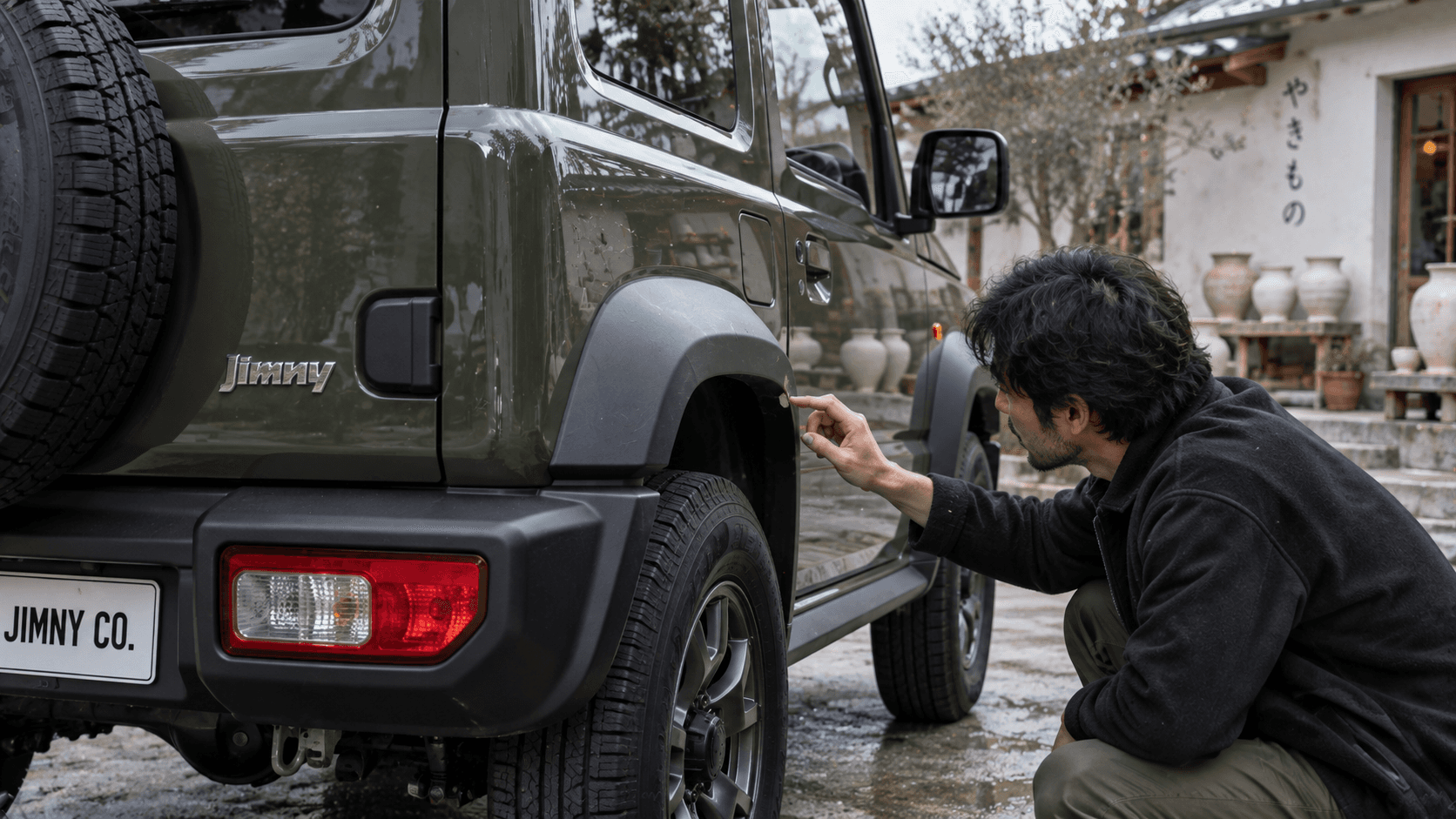
When you’re assessing used Jimny paintwork, the key is not simply whether the Suzuki Jimny still wears its original factory paint or has had a respray, but what the finish reveals about the vehicle’s history, repair quality, panel alignment, and condition underneath. A fresh respray can look sharper in photographs, especially when a vehicle has just arrived from Japan, while factory paint can feel like the safer choice.
But paint alone doesn’t tell the full story about used Jimny paintwork.
A clean factory finish may support a Jimny’s originality, while a properly completed respray can be entirely acceptable. The important questions are why the work was done, how well it was carried out, whether the colour match and paint depth are consistent, if there is overspray or uneven panel gaps, and what sits beneath the surface.
For buyers in Ireland, particularly around Dublin, who are considering a used or imported Jimny for personal or family use, these checks matter because paintwork often points to previous repairs, rust or corrosion risk, and long-term durability that photos will not show. In our experience, the best way to assess Jimny bodywork is to combine the Japanese auction information with a proper physical inspection. One without the other can leave gaps, so this guide looks at factory paint versus respray, auction sheets, import considerations, rust risks, and the wider condition of the vehicle beyond the paint itself.
Is Factory Paint Always Better on a Used Suzuki Jimny?
Factory paint is valuable because it gives us a clearer baseline. Consistent colour, texture, and paint depth can suggest that panels haven’t been repaired or refinished since the vehicle left the factory.
That matters when buying a Suzuki Jimny because originality can make its history easier to understand. It can also be attractive to buyers who want a standard example or plan to keep the vehicle long term.
Still, factory paint isn’t automatically perfect. Stone chips, light scratches, fading, and small parking marks are normal on a used Jimny. Japanese weather, coastal air, and years of everyday use can all leave their mark.
We’d rather see honest, age-related wear than cosmetic work that hides a poor repair.
Is a Fresh Respray a Red Flag?
Not necessarily. A respray may have been completed to correct sun fade, remove scratches, refresh a customised Jimny, or improve a finish before sale.
Good paintwork should have an even colour, a consistent gloss level, and a clean transition between panels. The finish should look right in daylight, not just under showroom lights.
The concern isn’t simply that a panel has been painted. It’s whether the repaint points to accident damage, corrosion, rushed preparation, or filler underneath.
In our experience, a transparent, high-quality repaint is far preferable to a vehicle advertised as “original” when the evidence says otherwise.
What We Check on Jimny Bodywork
Paint depth across every panel
A paint-depth gauge helps us compare readings around the Jimny. Factory-painted panels should generally produce a reasonably consistent pattern, allowing for normal production variation.
A noticeably higher reading may indicate additional paint, primer, or body filler. That doesn’t prove a bad repair, but it tells us where to look more closely.
We compare panels rather than relying on one isolated number. The bonnet, doors, wings, rear quarter panels, and tailgate should make sense as a complete picture.
Colour match and paint texture
Metallic and pearl finishes can be difficult to match. We inspect the vehicle in natural light and view adjoining panels from several angles.
We look for colour differences, cloudy metallic flake, heavy orange peel, dry spray, sanding marks, or an unusually glossy panel beside an older one. Irish grey skies can disguise colour mismatch, so changing the viewing angle is essential.
Overspray, masking lines, and disturbed fittings
Poor preparation often reveals itself around the edges. We check door rubbers, window seals, lamps, wheel-arch trim, badges, and under-bonnet areas for overspray or hard masking lines.
We also inspect panel bolts and fasteners. Tool marks, broken paint, or misaligned fittings can suggest that a panel has been removed or adjusted.
Again, that isn’t an automatic rejection. It’s evidence that needs an explanation.
Panel gaps and shut lines
The bonnet, doors, and tailgate should sit evenly. Unequal gaps, a door that needs extra force, or a bonnet that sits high on one side may point to poor adjustment or earlier impact repairs.
The Jimny’s upright shape makes some alignment issues relatively easy to spot once you know where to look. We check from the front, rear, and along both sides rather than judging it from one flattering photograph.
Welds, seams, and inner structures
Cosmetic paint can hide the outer signs of a repair, but the inner structure often tells more of the story.
We inspect factory seams, spot welds, and sealant around the engine bay, floor, rear load area, and inner wings. Uneven welding, fresh seam sealer, or distorted metal can indicate more substantial previous work.
For any used Jimny inspection, structural condition matters far more than a mirror-like finish.

Rust Matters More Than Shine
Used Suzuki Jimny paintwork is thin and soft, making it prone to chips and scratches that can expose bare metal and start rust. Acidic substances can etch the clear coat if not promptly removed, accelerating paint degradation.
Jimnys are proper compact 4x4s. They may have been used on muddy tracks, forestry roads, beaches, or salted winter roads before they ever reached Ireland.
That’s why the underside deserves as much attention as the paint above it.
We check the chassis rails, crossmembers, suspension mounting points, body mounts, sills, wheel arches, and floor. Surface discolouration and serious corrosion aren’t the same thing, but bubbling paint, swelling seams, or fresh underseal over questionable metal needs investigation.
Applying a protective coating or ceramic coating can create a hydrophobic barrier for easier cleaning and help prevent paint degradation. The clear coat on Jimnys can also peel or delaminate under sun exposure, so protection is key.
Post-off-road cleaning reduces the risk of moisture retention leading to rust. Using a two-bucket wash method helps prevent scratching, while a dedicated plastic trim restorer can help prevent fading in exterior trims.
Jimny’s design is prone to brush scratches due to its off-road capability, making careful paint maintenance essential.
Using a combination of washing, polishing, and protection is essential for paint maintenance. Employing a clay bar to remove embedded contaminants before polishing can greatly improve the finish and longevity of the paint.
Once a Jimny is in Dublin, Irish rain, coastal air, wet back roads, and winter road treatments can accelerate any existing weakness. A clean underbody gives an imported Jimny a much better start to life here.
Regular inspection of the chassis and underbody is important to catch corrosion early and maintain the vehicle’s integrity.
Early attention to touch-up paint is also crucial to prevent rust from starting at paint chips.
How We Read a Jimny Auction Sheet
A Jimny auction sheet is a useful part of the vehicle’s history. It may record the overall auction grade, interior grade, visible marks, repairs, panels that were replaced, or comments from the auction inspector.
We use the diagram and written notes to identify areas that deserve closer examination. If the sheet flags a repaired panel, paint mark, or corrosion, we expect the physical vehicle to support that description.
However, an auction sheet isn’t a mechanical warranty or a substitute for inspection. Grading standards can vary, translations can lose nuance, and a short inspection in Japan can’t predict every issue a vehicle may develop.
That’s why buying from auction based only on a grade or a few attractive photos is risky. The sheet should also support what the seller is offering, not just the grade or images. It is one layer of evidence, not the final verdict.
Our Used Jimny Inspection Checklist
When we assess a potential import, we build a joined-up view of the vehicle rather than chasing one impressive score.
Our checks consider:
The auction sheet, condition map, and supporting photographs
Paint consistency, previous repairs, and panel alignment
Chassis, underbody, and common corrosion areas
Engine-bay condition, leaks, and signs of neglect
Transmission, four-wheel-drive operation, and road behaviour
Tyres, brakes, suspension, and steering
Cabin wear compared with the recorded mileage
Service history, available records, and specification
Accessories or modifications that could affect everyday use in Ireland
We often see heavily accessorised Jimnys that look brilliant online. A lift kit, larger tyres, roof rack, or off-road bumper can suit the right owner, but each modification needs to be assessed for quality, road manners, and suitability for Irish driving.
If you’re considering something more individual, The Jimny Co’s Lookbook includes previous builds and specifications that can help shape your own order.
What Changes When the Jimny Is Coming to Ireland?
An imported Jimny needs to work here, not just photograph well in Japan.
We consider how the vehicle will handle tight Dublin streets, wet motorways, rough regional roads, and weekend off-road use. Tyre choice, suspension setup, lighting, and accessories all affect how pleasant it’ll be to own.
The paperwork matters too. VRT and registration aren’t minor afterthoughts, and Revenue requirements need to be handled correctly.
An NCT is important, but it shouldn’t be treated as a pre-purchase condition report. The NCT is Ireland’s compulsory roadworthiness inspection; it doesn’t replace detailed checks into paint history, accident repairs, or the long-term quality of a respray.
The Jimny’s ladder-frame construction and part-time four-wheel-drive system are also important considerations. They’re two reasons structural, mechanical, and underbody checks matter so much.
How The Jimny Co Handles an Import
Buying a Jimny directly from Japan can feel like a maze of auction sheets, shipping dates, taxes, and registration steps. We make it a managed process.
We help you search available Jimny options in Japan, find the right one, review its condition, then arrange inspection and shipping, handle VRT and Irish registration, and prepare it for collection in Dublin.
Our vehicles are supplied with warranty support, and we can also discuss finance and trade-ins.
If you need a Jimny for business visibility as well as daily driving, The Jimny Co can also help with commercial options. They’re compact, distinctive, and hard to miss around Dublin.
Factory Paint or Respray: Which Brand New Jimny Would We Buy?
We’d choose the Jimny with the clearest history and the best underlying condition.
If two vehicles were equal, original factory paint would usually be a welcome advantage. It reduces uncertainty and preserves originality.
But we wouldn’t dismiss a correctly refinished Jimny with documented, non-structural work. Equally, we wouldn’t choose tired factory paint if the chassis, mechanical condition, or maintenance history raised concerns.
The right decision comes from evidence: the auction sheet, the inspection, the quality of any repairs, and whether the vehicle suits its future use on Irish roads.
If you’re buying a Jimny, don’t let fresh paint make the decision for you. Look deeper, or have someone experienced do it on your behalf.
Our Passion for Jimnys is backed by 35+ years of Suzuki Heritage.
The Jimny Co is a sub-brand of Gerry Caffrey Motors — Ireland’s longest-standing Suzuki dealership.
© The Jimny Co 2025
01 490 1134
106 - 112 Terenure Road North,
Dublin 6W, Ireland, D6WWR13