Used Jimny Condition: Why We Care More About Condition Than Kilometres When Sourcing a Jimny
11th Sept 2026 1 5 minute read

Low kilometers look great in an advert. They’re easy to understand, easy to compare, and reassuring when you’re buying a used Suzuki Jimny. However, the used Jimny condition is what truly matters for lasting satisfaction, and a well-maintained Jimny with higher mileage can be a better buy than a neglected low-kilometre example.
But mileage alone doesn’t tell you how a vehicle has been driven, stored, or maintained. For buyers in Ireland considering a used Suzuki Jimny, especially a Japan import for daily driving or off-road use, the details that matter are chassis and underbody condition, bodywork and past repairs, engine and drivetrain health, suspension, tyres, interior wear, auction reports, service history, mileage verification, and how well the vehicle has been prepared for Irish roads and the import proces.
In our experience, a well-cared-for Jimny with 70,000 kilometres can be a much better purchase than a neglected one showing 30,000. That’s why the condition comes first whenever The Jimny Co. sources a vehicle from Japan, because buying on true mechanical and structural condition gives you a better chance of long-term reliability and satisfaction.
Is Low Jimny Mileage Always Better or Worth Buying?
Not necessarily.
Jimny mileage is useful, but it’s only one part of the vehicle’s story. A low-mileage Jimny may have spent long periods parked outside, completed repeated short journeys, or missed important maintenance because its owner believed it wasn’t being driven enough to need servicing.
Age still affects rubber seals, tires, fluids, batteries, and suspension components. Moisture can also reach the chassis whether the odometer is moving or not, accelerating rust, a common issue with used Suzuki Jimny vehicles.
A higher-mileage Jimny with a strong service record may have spent its life on longer, gentler journeys. If it has been maintained properly and kept in good condition, those extra kilometers needn’t be a concern.
The number matters. The context behind it matters more.
What We Check When Sourcing an Imported Jimny
When we assess an imported Jimny, we look at the complete vehicle rather than chasing the lowest number on the odometer.
Chassis and Underbody Condition
A Jimny is a proper compact 4x4 with a separate ladder-frame chassis and solid axles front and rear, and that ladder-frame layout has been retained across all generations as a key part of its off-road strength. That construction is a major part of its charm and off-road ability, giving excellent wheel articulation and traction capabilities similar to much larger off-roaders like the Land Rover Defender or Toyota Land Cruiser, and many modern vehicles simply cannot match it. Solid axles also work with low-range transfer gearing to help the Jimny beat tougher terrain than most small SUVs.
This light weight and robust mechanically simple setup make the Jimny highly capable on dirt, ground, and rough terrain, with compact dimensions that are a real advantage on tight forest trails, but it also means the frame deserves careful inspection for long-term reliability.
We look for corrosion, impact damage, poor repairs, and signs that mud or moisture may have been allowed to sit underneath the vehicle. Factory rust protection is often limited, and structural rust in the chassis can be very expensive to repair.
Japan has several climates. A Jimny from a mild urban area can have lived a very different life from one used in a snowy region where road treatments are common.
That matters once the vehicle reaches Dublin or other markets like the UK and Australia. Irish rain, wet winter roads, and coastal air won’t improve an existing corrosion problem.
Bodywork and Previous Repairs
A shiny exterior can hide plenty.
We assess panel alignment, paint consistency, dents, scratches, and evidence of previous accident repairs. Small cosmetic marks may be perfectly acceptable, provided they’re honestly identified and reflected in the overall assessment.
Structural damage or questionable repairs are a different matter. A suspiciously low-kilometer Jimny doesn’t become a good buy simply because it photographs well.
Engine, Gearbox, and Four-Wheel-Drive System in the Fourth Generation Suzuki Jimny
Jimnys are known for being tough, but they still need proper maintenance. Long-term performance depends on that upkeep, especially on older 1.3-liter models, where the timing belt should be replaced at 70,000 miles for reliable power delivery.
We check for leaks, unusual noises, poor cold-start behavior, and warning lights. The gearbox, clutch or automatic transmission, transfer case, and selectable four-wheel-drive system also need to operate correctly. On fourth-generation models introduced in 2018, Suzuki moved to a 1.5-liter petrol engine, so engine checks should reflect that update.
A vehicle intended for off-road use deserves particular attention. We often see accessories that suggest an adventurous previous owner, but the quality of the installation—and the way the vehicle was used—matters more than how rugged it looks.
Suspension, Steering, Brakes, and Tyres
Irish roads can be hard on suspension. Potholes, broken surfaces, and wet country lanes quickly expose tired bushes, worn dampers, or poor wheel alignment. The Jimny is also prone to a steering issue known as death wobble, which can upset the ride on tarmac. Common causes include worn kingpin bearings or poor wheel balancing, so both should be checked during inspection or a test drive.
Tyres also tell a story. Uneven wear may point to an alignment or suspension issue, while old tires can require replacement even if they still have plenty of tread.
For customers planning farm access, forestry routes, or weekends in Wicklow, we consider whether the vehicle’s wheels, tyres, and accessories suit its intended use. Modifications should improve a Jimny, not compromise it, as suspension lifts can affect handling and performance.
Interior Wear and Rear Seats
The cabin can help confirm whether the reported Jimny mileage makes sense.
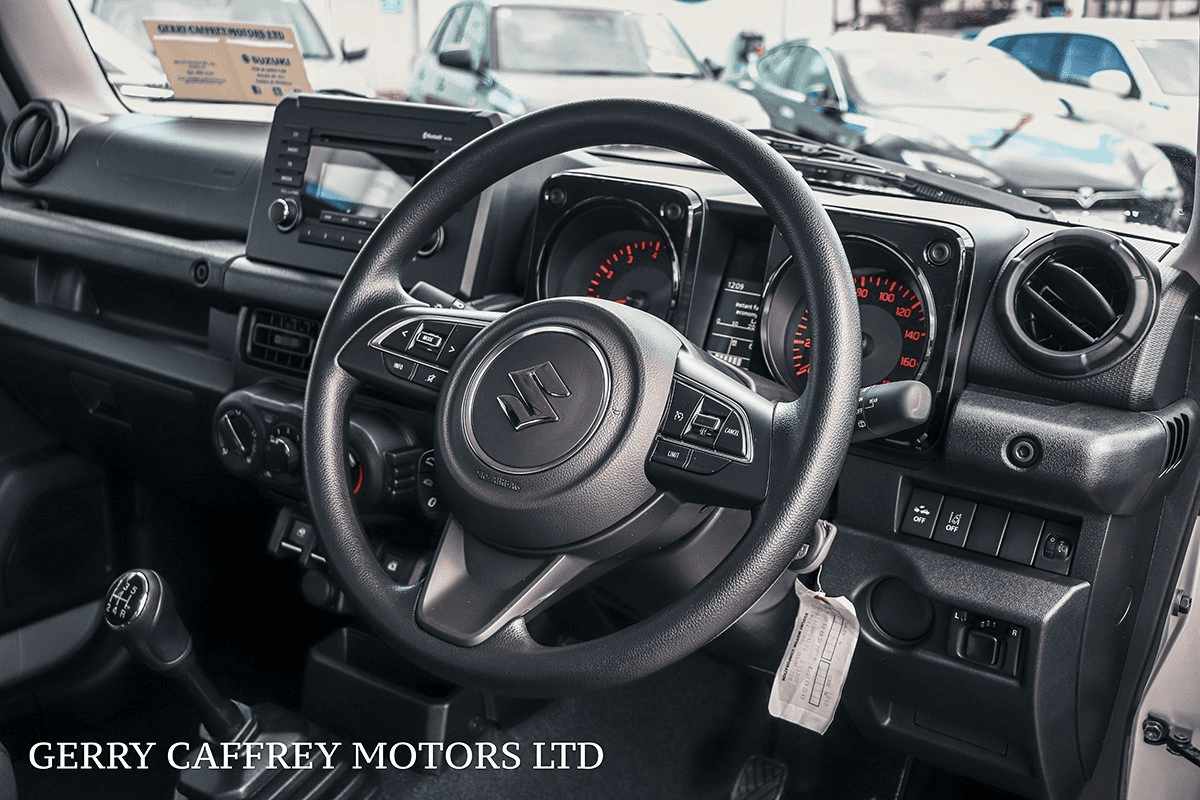
Heavy wear on the driver’s seat, steering wheel, pedals, and controls may be inconsistent with an exceptionally low odometer reading. Equally, a clean cabin often reflects an owner who looked after the entire vehicle.
Rear seats in the Suzuki Jimny are limited in space, and the interior is utilitarian, reflecting the vehicle’s primary focus on capability rather than passenger comfort. Many owners fold the rear seats down to increase cargo space, which is an important consideration for buyers. It is best to treat the rear area practically and check whether it will fill your real luggage or day-to-day needs. Some of the materials can feel cheap, but they are also part of the Jimny’s tough, easy-clean design.
Interior condition matters for everyday ownership too. A Jimny may be an off-road tool, but many of our customers also use theirs around Terenure, Rathfarnham, Templeogue, and wider South Dublin, appreciating the excellent visibility and compact stance it offers.
How We Read a Japan Jimny Auction Report
A Japan Jimny auction report is a valuable starting point, but it isn’t the same as seeing and assessing the vehicle properly.
Auction sheets can include an overall grade, interior rating, recorded damage, and a diagram showing defects around the body. They may also note modifications, corrosion, repairs, or mechanical concerns.
The grades need context. Standards and notation can vary between auction houses, while a single overall score can’t describe every detail that matters to an Irish buyer.
That’s why we don’t simply search for a particular grade and place a bid. We review the report, inspect the available evidence, and decide whether that individual Jimny meets our standards.
If something doesn’t add up, we’re prepared to leave it behind. There’ll always be another auction.

Why Jimny Service History Matters
A strong Jimny service history helps us understand how the vehicle was maintained between inspections.
We look for evidence of routine oil and filter changes, scheduled maintenance, and attention to age-related items, with regular servicing generally meaning annual intervals or every 9,000 miles. Japanese records may include service books, invoices, inspection documents, and maintenance stickers, so they need to be read together rather than treated as a single tick-box exercise. A 25-point service for Jimny vehicles costs £129, which is a useful benchmark when reviewing upkeep and overall cost.
A missing stamp doesn’t automatically make a vehicle unsuitable. Likewise, a fully stamped book doesn’t excuse obvious mechanical or structural problems.
The best examples are the ones where the paperwork, physical condition, and recorded mileage support the same story, helping confirm the car has been maintained in a consistent and reliable way.
Can You Trust the Mileage on a Japanese Import?
Mileage should always be verified through the strongest records available.
That can include auction documentation, inspection records, servicing information, and the physical condition of the vehicle. We look for consistency across all of them.
Mileage verification matters when buying any second-hand vehicle. The AA Ireland car history service highlights checks such as mileage consistency, write-off history, and finance status for Irish-registered cars.
For a vehicle coming directly from Japan, the Japanese records and pre-purchase inspection are especially important because it hasn’t yet built up an Irish history.
Condition Versus Kilometers: A Simple Example
Imagine two similar Jimnys.
The first has 28,000 kilometers but shows corrosion underneath, aging tires, inconsistent servicing, and evidence of a previous repair.
The second has 65,000 kilometers, a clean chassis, consistent maintenance, tidy bodywork, and a four-wheel-drive system that operates as it should.
We’d take the second vehicle.
It may have travelled farther, but it gives us more confidence about how it has been owned. That’s the difference between buying an odometer reading and buying a good Jimny.
Preparing a Japanese Jimny for Irish Roads
Finding the right vehicle is only the beginning.
Once we’ve sourced a suitable Jimny in Japan, The Jimny Co manages the process through shipping, arrival in Ireland, VRT, registration, and preparation.
Revenue explains that imported used vehicles require the relevant foreign registration documents and that VRT is generally charged when a vehicle is registered in the state. You can read the current requirements on the Revenue VRT and registration page.
We handle that administration for our customers, so you don’t have to navigate auction purchasing, international transport, and Irish registration on your own.
The vehicle is then prepared for Irish use. Depending on the individual Jimny and the customer’s plans, that may include servicing, tires, accessories, or other required work.
An NCT is an important roadworthiness test, but it isn’t a substitute for carefully selecting the vehicle in the first place. Our aim is to start with the strongest possible example before it ever reaches the test center.
Buying a Used Suzuki Jimny in Ireland: What Should You Prioritise?
If you’re buying a used Jimny, focus on evidence rather than one headline figure.
Ask yourself:
Is the chassis clean and structurally sound?
Does the condition support the recorded mileage?
Is there credible servicing and ownership documentation?
Has the four-wheel-drive system been checked?
Are previous repairs or modifications clearly understood?
What will the vehicle need before regular use on Irish roads?
Is there a warranty from the supplying dealer?
In the used Suzuki Jimny market, prices commonly range from about £1,000 to £14,500, with a decent 2005 example often around £3,500 to £4,500.
Older models often sit around $3,000 to $10,000, well-kept mid-generation cars around $8,000 to $15,000, and newer examples can exceed $30,000.
Buyer advice: avoid soft-top models because of engine and refinement concerns.
You should also consider how you’ll use it as practical buying advice for judging its appeal, safety, and road comfort.
A Jimny for daily Dublin driving may need a different tire and accessory setup from one destined for farm tracks, forestry routes, or weekend overlanding. Our guide to the Jimny Sierra and five-door Jimny Nomade can help you compare the different formats.
The Full Jimny Co Import Process
Our job is to make importing a Jimny feel straightforward.
We help define the model, color, transmission (manual or automatic), specification, and budget you’re looking for, while also guiding you through the wider suzuki jimny cars range so you can see where each generation may best stand for your needs. The first generation was produced from 1970 to 1981, the second ran from 1981 to 1998 as the SJ series, and the third was built from 1998 to 2018 with coil-spring suspension. We then search in Japan, assess suitable vehicles, and arrange an inspection before committing to a purchase.
From there, we coordinate shipping, VRT, registration, and vehicle preparation in Dublin. Around the world, Suzuki has sold about 2.85 million Jimny units, which speaks to the model’s long-running appeal. Your Jimny is supplied with warranty support, and we can discuss accessories, finance, and a trade-in for your current vehicle.
If you’d prefer something already available—or want an idea of the Jimnys we regularly source for sale—take a look at our current new and used stock. You can also explore our available finance options.
A great Jimny isn’t defined by the smallest number on its dashboard. It’s defined by honest history, sound mechanics, a clean chassis, and the way it has been cared for.
Thinking about a Jimny import? We handle it all—from Japan to Dublin. Contact The Jimny Co today for a relaxed chat about the right Jimny for you.

Our Passion for Jimnys is backed by 35+ years of Suzuki Heritage.
The Jimny Co is a sub-brand of Gerry Caffrey Motors — Ireland’s longest-standing Suzuki dealership.
© The Jimny Co 2025
01 490 1134
106 - 112 Terenure Road North,
Dublin 6W, Ireland, D6WWR13