Jimny Wet Weather Driving: What Changes When the Roads Turn Wet in September?
7th Sept 2026 14 minute read

September changes the feel of Irish roads surprisingly quickly.
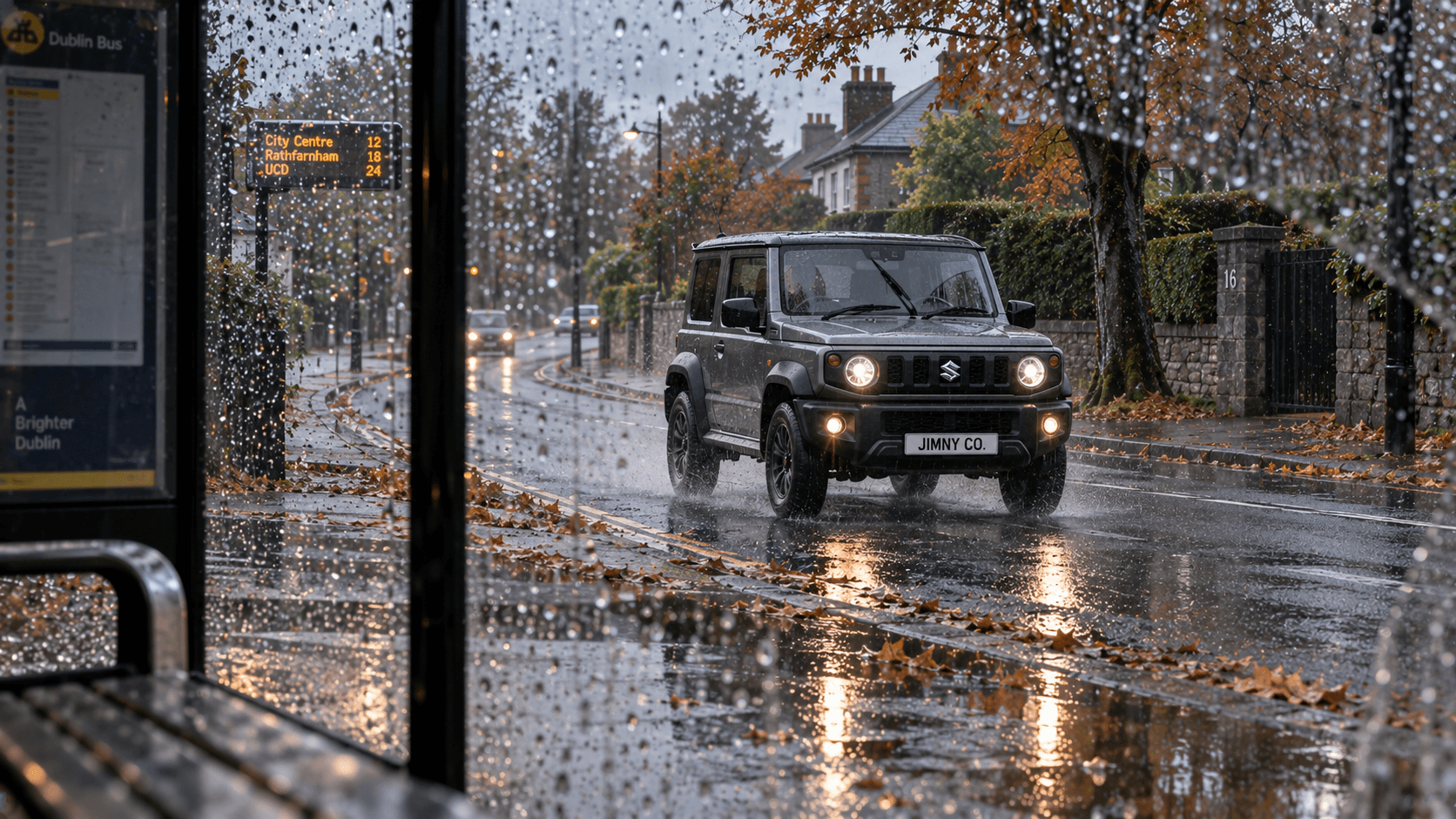
Morning temperatures dip, daylight fades earlier, and familiar routes around Dublin become coated in rain, grit, and fallen leaves. In a Suzuki Jimny 4x4, those conditions don’t remove the fun: Jimny wet weather driving suits Ireland well when the vehicle is driven smoothly, the tyres are in good condition, and the basics are checked before the season turns. However, its part-time four-wheel-drive system does not provide extra braking grip on wet roads.
The new Jimny is light, compact, and genuinely capable with its rugged charm, traditional ladder frame construction, and impressive ground clearance. It’s also a traditional, short-wheelbase off roader rather than a soft-road SUV, so owners and prospective buyers in Ireland need to understand how its handling changes when grip levels fall, when 4WD modes help, and where standing water, wet leaves, and poor visibility can catch it out.
Here’s what to expect from autumn driving in a Jimny, including how wet Irish roads affect handling, why tyres matter so much, braking and visibility tips, the seasonal checks worth doing, and what to look at if your Jimny has been imported and needs to be ready for Dublin conditions. On Irish roads that can turn slippery very quickly in autumn, getting those details right helps you stay safe, protect the Jimny’s performance, and enjoy it year-round.
How Wet Irish Roads Change Jimny Handling
A Jimny feels direct and characterful on the road. That’s part of its appeal.
Its short wheelbase, relatively high driving position, and rigid-axle suspension with 3-link coil springs also mean it can react more noticeably to standing water, broken surfaces, and sudden steering inputs than a heavier family crossover. The Jimny’s rear seats and front wheels work together to maintain grip, but its lightweight (weighing around 1,135kg) and narrow tyres make it prone to hydroplaning in wet conditions.
On a wet bend through the Dublin Mountains or a greasy roundabout in South Dublin, the important word is smooth.
Brake earlier, feed in the steering wheel progressively, and avoid applying the throttle abruptly as you exit a corner. Leave more space than you would in dry conditions, particularly when following vans or larger vehicles that block your view of standing water.
In our experience, Jimny handling feels most settled when the driver looks well ahead and keeps every input measured. The vehicle will communicate what the road is doing, but you have to give the tyres time to respond.
Your Jimny Tyres Matter More Than the 4x4 Badge
Four-wheel drive can help a vehicle move when traction is limited. It can’t create extra braking grip.
That distinction matters in September. Wet leaves, diesel residue, and polished road surfaces can all reduce adhesion, even when there’s no dramatic flooding.
We often see owners focus on accessories and off-road upgrades while overlooking the four small contact patches connecting their Jimny to the road. Before autumn, check:
Tread depth across the full usable width of every tyre
Cuts, cracking, bulges, or uneven shoulder wear
Cold tyre pressures against the specification for your exact Jimny
The age and general condition of the tyres
Whether all four tyres are suitable for the same type of use
Ireland’s legal minimum tread depth for a car tyre is 1.6mm, but the Road Safety Authority recommends at least 3mm for safety. That extra margin is worth considering before months of rain and lower temperatures.
Check pressures when the tyres are cold. Don’t rely on a figure from an online forum, especially with a Japanese import, aftermarket wheels, or non-standard tyres. Use the label or handbook for your specific vehicle and setup.
Are All-Terrain Tyres Better Off Road and in the Rain?
Not automatically.
A quality all-terrain tyre can be an excellent match for a Jimny used on farms, trails, or muddy access roads. However, tread pattern, rubber compound, tyre age, and construction all affect wet-road performance.
An aggressive-looking tyre isn’t necessarily the best option for daily commuting between Terenure and Dublin city centre. If most of your driving is on tarmac, wet braking, road noise, and steering response should carry as much weight as off-road appearance.
We help customers choose Jimny tyres and accessories around how the vehicle will actually be used. A weekend off-road build needs a different compromise from a Jimny that spends five days a week on the M50.
Should You Select 4H When It Starts Raining?
Usually, rain on an ordinary sealed road isn’t a reason by itself to engage 4H.
The Suzuki Jimny uses a selectable, part-time four-wheel-drive system with low range transfer gear. In normal road use, 2H drives the rear wheels. The 4H and 4L settings are intended for surfaces where the wheels can slip, such as loose tracks, mud, snow, or particularly difficult off-road terrain.
Because this isn’t a permanent all-wheel-drive system, 4H shouldn’t be treated as a wet-weather button. Using part-time four-wheel drive on a high-grip sealed surface can place unnecessary stress on the transmission as the vehicle turns.
Suzuki describes the Jimny’s system as offering 2H, 4H, and 4L modes, supported by features such as brake LSD traction control on slippery terrain and hill descent control for steep slopes. You can read more on the official Suzuki Jimny page.
For wet Dublin streets and ordinary national roads, good tyres, appropriate speed, and smooth inputs matter more than selecting 4H. Always follow the handbook supplied with your exact model, as specifications can vary.
When 4H and Low Range Transfer Gear Do Become Useful
A soaked forestry track, muddy field entrance, or loose gravel lane is a different situation.
On low-grip, unsealed ground, 4H can provide the extra traction needed to keep the Jimny moving without excessive wheelspin. Select it before you’re stuck, not after the wheels have dug themselves in.
Reserve 4L for slow, demanding terrain where maximum control and low-speed torque are required. It isn’t intended for normal wet-road driving.
If you’re new to the system, learn how it operates somewhere safe before your first muddy trip. A capable offroader is at its best when the driver understands what each mode actually does.
Watch for Standing Water and Wet Leaves
September rain often exposes poor drainage on Irish roads.
Water can gather beside kerbs, in depressions, and along the edge of rural routes. Hitting it too quickly may pull at the steering wheel or cause a tyre to ride over the water rather than clear it effectively.
Slow down before the water. Keep the steering as straight as possible and avoid sharp braking while passing through it.
Wet leaves deserve the same caution. Once crushed into the road, they can create a surprisingly slick surface, particularly under trees or on shaded bends. Allow extra room and avoid placing sudden demands on the tyres.
If you can’t judge the depth of standing water, don’t drive through it. A Jimny’s off-road ability doesn’t make its engine, electrics, or cabin immune to flood damage.
Braking, Visibility, and Crosswinds
Wet-weather preparation isn’t limited to tyres.
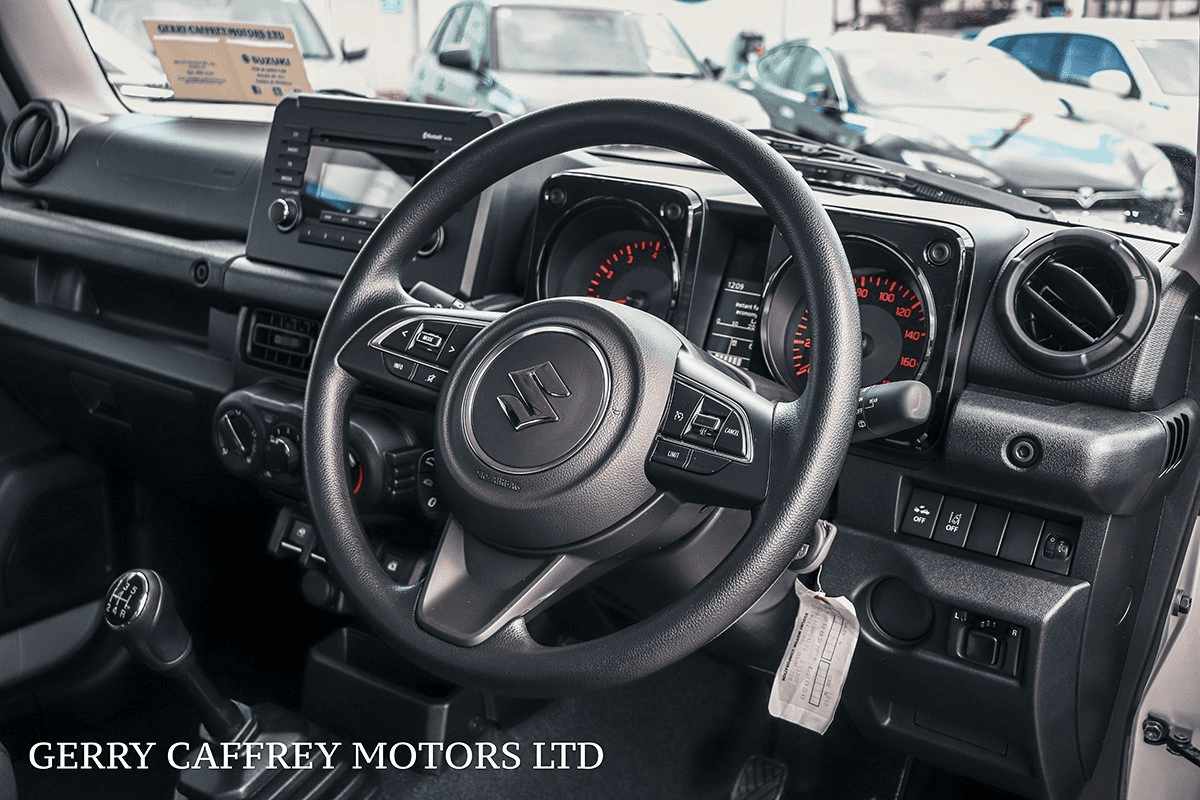
Check that the wiper blades clear the full windscreen without smearing. Top up the washer fluid, clean the inside of the glass, and make sure every exterior light works properly, including high and low beams.
A Jimny’s upright shape and ladder frame body can also make strong autumn crosswinds more noticeable, particularly on exposed sections of the M50, the N11, and coastal roads. Reduce speed, keep both hands on the steering wheel, and leave space when passing high-sided vehicles.
With braking, start earlier and apply pressure progressively. The Jimny’s braking force is managed with assistance from systems like hill hold control and brake LSD traction control to improve safety on slippery surfaces. If the traffic ahead compresses suddenly, the extra space you left is far more useful than any 4x4 hardware.
A Practical September Jimny Check
Before the weather turns properly wet, we’d give a Jimny a simple seasonal inspection.
Tyres and Wheels
Check tread, pressures, and overall condition. Look for damage after off-road use, and confirm that wheel nuts are correctly tightened if wheels have recently been changed.
Brakes
Listen for scraping, grinding, or unusual noises. If the pedal feels different, the vehicle pulls under braking, or a warning light remains on, arrange an inspection.
Wipers and Washers
Replace blades that judder or leave streaks. Confirm that the washer jets are aimed correctly and that the reservoir contains suitable screenwash.
Lights
Test dipped beams, main beams, indicators, brake lights, fog lights, and number-plate lamps. Clean lenses make a real difference on dark, wet evenings.
Battery and Fluids
Cooler mornings can expose a weak battery. Check fluid levels and investigate any leaks rather than waiting for a warning light.
Underbody
If the Jimny has spent summer on beaches, muddy tracks, or farm roads, inspect and clean the underside. Salt, sand, and trapped dirt shouldn’t be left sitting around chassis components.
For a more complete seasonal inspection, see our Jimny articles and autumn ownership guides.
Preparing an Imported Jimny for Ireland
Buying the right Jimny begins well before it reaches Dublin.
At The Jimny Co, we source vehicles in Japan around the customer’s preferred generation, colour, specification, and intended use, and help buyers compare jimny models and specs before purchase. We inspect the vehicle before purchase, arrange shipping, and handle the customs, VRT, and registration process.
Many newer imported examples use the 1.5-litre engine with 100bhp, which provides strong torque for off-roading and is part of Suzuki's well-regarded Suzuki range.
That matters with Jimny Ireland imports because paperwork is only part of the job. Tyre condition, service history, underside condition, and the suitability of any accessories also need proper attention.
Revenue rules require imported vehicles to be registered correctly, and VRT is generally payable when the vehicle is registered in the State. We manage that process, prepare the Jimny for Irish roads, and supply it with local warranty support.
Buyers should also understand the Jimny’s three-star Euro NCAP result when assessing safety expectations, and that the latest model includes Suzuki Safety Support with lane departure warning, high beam assist, and visual warning features.
You can explore our full Jimny import process from Japan or browse previous specifications in the Jimny Lookbook.
The compact size and 9.8-metre turning circle also make it easy to park in Irish towns and cities.
Finance is available for suitable customers, and we accept trade-ins to make the move into a Jimny more straightforward. We can also help with road-focused accessories, offroad equipment, and tyre choices based on where you’ll actually drive.
Get Your Jimny Ready for the Irish Autumn
September doesn’t make a Jimny less enjoyable. It simply shifts the focus towards preparation, tyre condition, and smooth driving.

Our Passion for Jimnys is backed by 35+ years of Suzuki Heritage.
The Jimny Co is a sub-brand of Gerry Caffrey Motors — Ireland’s longest-standing Suzuki dealership.
© The Jimny Co 2025
01 490 1134
106 - 112 Terenure Road North,
Dublin 6W, Ireland, D6WWR13