Jimny Grip: Why It Matters More Than 4WD?
4th Sept 2026 17 minute read

A Suzuki Jimny and an Irish autumn seem made for one another. But if you’re searching for Jimny grip, the short answer is this: it means the Jimny’s real traction and control on the road or off it, and it depends on far more than 4WD alone, especially tyres, suspension and driver technique.
Wet leaves and a Jimny can be a deceptive combination. Four-wheel drive may help you get moving on a loose surface, but it can’t create grip where the tyres don’t have it. For current and prospective Suzuki Jimny drivers in Ireland, especially anyone dealing with tree-lined South Dublin roads, shaded bends in Wicklow or damp housing estates where leaves gather beside drains, that distinction is central to staying safe and confident.
This guide looks at where Jimny grip comes from, why 4WD has limits on wet Irish roads, how tyres and tyre maintenance affect traction, what simple checks to make before driving, and which driving habits help on slippery surfaces. It also touches on import considerations and the Jimny’s wider safety and off-road features, so you can judge what the vehicle will and won’t do when conditions turn slick.
Why Are Wet Leaves So Slippery for the Suzuki Jimny?
Wet leaves form a soft, unstable layer between the tyre and the road. Add rain, leaf mulch and a smooth patch of tarmac, and the available grip can change within a few metres.
The danger isn’t always obvious. A road may look merely damp until you brake, turn or accelerate across a dense patch of leaves and feel the Jimny move more than expected.
We often see the greatest build-up on roads that stay shaded, under mature trees and near blocked gullies. Think suburban routes through Rathfarnham, Dundrum and Foxrock, or narrow roads leading towards the Dublin and Wicklow Mountains.
Treat glossy, flattened leaves as a low-grip surface. Slow down before reaching them, leave more room and keep every control input measured.
Does Jimny AllGrip Pro 4WD Help on Wet Roads?
Yes, but only in the right situation and within the limits set out in your owner’s manual.
The Suzuki Jimny uses a proper part-time four wheel drive system with a low range transfer gear. On generations equipped with Suzuki's ALLGRIP PRO, the driver can select 2H, 4H or low-range 4L for different off road conditions.
In simple terms, 4WD can send drive to both the front and rear axles and help the vehicle make progress where two-wheel drive is struggling. That’s useful on loose tracks, mud, gravel and other suitable low-grip terrain.
It doesn’t give the Jimny shorter braking distances or improved cornering grip on wet leaves, however. Features like brake LSD traction control help redistribute torque when slipping wheels occur, but ultimately grip depends on the tyres and surface.
Why 4WD or Low Range Transfer Gear Can’t Replace Tyre Grip
Braking and cornering forces still pass through four small tyre contact patches. If those contact patches can’t grip the surface, having four driven wheels won’t change the basic physics.
The right way to think about Jimny grip and 4WD is as a traction tool, not an all-weather shield. It can help you go; your tyres and driving technique determine whether you can slow down and change direction safely.
Should You Select 4H on a Wet Public Road?
Don’t engage 4H simply because ordinary paved roads are wet. A part-time 4WD system doesn’t have the same centre-differential arrangement as a permanent all-wheel-drive system, so using it on a firm, high-grip surface can cause transmission wind-up.
Use the mode specified for the actual surface and follow the handbook for your Jimny’s year and transmission. If conditions vary between clean tarmac and loose material, drive conservatively rather than treating 4H as a substitute for judgement.
Low-range 4L is for demanding, low-speed off road conditions such as steep hills or rough terrain. It isn’t an autumn-road setting.
Jimny Tyres Matter More Than the Drivetrain
If you want confidence on wet Irish roads, start with the rubber.
The legal minimum tyre tread depth in Ireland is 1.6 mm. However, the Road Safety Authority recommends having at least 3 mm for safety, particularly as tyre performance reduces with wear.
Legal doesn’t always mean ideal for a wet Irish autumn. A tyre approaching the minimum has less capacity to manage water and generally offers less margin when you meet standing water, leaf mulch or a sudden stop.
Check More Than Tread Depth
Before the wetter months, inspect all four wheels diagonal for:
Correct cold pressures for your exact Jimny and load
Even tread across the tyre
Cuts, cracks, bulges or embedded objects
A suitable load and speed rating
Matching size and type across each axle
Visible E or e approval markings for road use
Age and hardening, especially on a low-mileage import
That last point is easily missed. A Japanese import may have low kilometres and tidy-looking tread, but tyre age and condition matter as much as the number on the odometer.
In our experience, fresh, road-suitable Jimny tyres often make a bigger everyday difference than a dramatic off-road modification. They improve how the vehicle feels in rain, under braking force and through the tight bends found across South Dublin and Wicklow.
Road Tyres, All-Terrain Tyres or Mud-Terrain Tyres?
The best choice depends on how you actually use your Jimny.
A road-focused tyre with a strong wet-grip rating usually suits a Dublin daily driver that occasionally heads down a gravel lane. A quality all-terrain tyre can be a sensible compromise for owners mixing commuting with farms, forestry access or off road weekends.
Aggressive mud-terrain tyres are designed around a different priority. They can add noise, alter steering wheel feel and give away wet-tarmac performance, so don’t choose them for appearance alone.
Always check that any tyre and wheel package is suitable for the vehicle, correctly rated, road legal and acceptable for NCT purposes. Oversized tyres can also affect clearance, gearing, speedometer accuracy and insurance declarations.
How to Drive a Jimny Safely Over Wet Leaves
Good autumn driving is mostly about creating time and avoiding sudden weight transfer.
1. Reduce Speed Before the Leaves
Brake while the tyres are still on a clearer, more predictable surface. If you wait until you’re on the leaf-covered section, you may already have less grip available.
2. Increase Your Following Distance
Leave a bigger gap than you would on a dry road. That extra space gives you time to slow progressively rather than braking hard.
3. Keep Steering, Braking and Acceleration Smooth
Ask the tyres to do one job at a time where possible. Heavy braking while turning uses more of the limited grip than either action on its own.
Feed in the throttle gently, particularly in a light, short-wheelbase vehicle such as the Jimny. If the tyres begin to slip, ease off smoothly and look where you want the car to go.
4. Read the Road Ahead
Watch for leaf piles on bends, at junctions and close to the kerb. Be especially cautious after overnight rain or on a cold morning when a shaded road hasn’t dried.
Standing water can hide potholes, while leaves can conceal road markings and the edge of the carriageway. Give cyclists, pedestrians and oncoming traffic extra room on narrow city streets.
5. Keep Visibility Equipment Working
Clean glass, effective wiper blades, working lights and topped-up screenwash make a real difference when spray and low autumn sun arrive together.
Don’t wait for the NCT to identify worn tyres or weak wipers. The NCT is a roadworthiness check at a point in time, not a replacement for routine maintenance.

An Autumn Jimny Check Before You Leave Dublin
A five-minute check is worthwhile before a wet commute or a weekend run into Wicklow.
Check tyre pressures when the tyres are cold
Measure tread rather than judging it by eye
Look for uneven wear, cuts and sidewall damage
Clear leaves from the windscreen scuttle and around drains
Test the wipers, washers, dipped headlights and brake lights
Confirm the brakes feel normal before joining faster traffic
Secure tools, recovery equipment and accessories
Check the weather and allow more journey time
If you use a roof rack, lift kit, larger wheels or other accessories, make sure everything is correctly fitted and declared where required. Modifications should support how you use the Jimny, not compromise its wet-road behaviour.
What We Check on a Jimny Imported from Japan
Buying the right Suzuki Jimny begins well before it reaches Dublin.
At The Jimny Co, we handle the complete import process for customers. We find suitable Jimnys in Japan, review the vehicle and auction information, arrange inspection and shipping, manage VRT and registration, and prepare the vehicle for Irish ownership with warranty options.
Tyres are part of that bigger picture. We look beyond low mileage and cosmetic condition because a Jimny must suit Irish roads, Irish weather and the customer’s actual use.
Japanese used imports require the relevant export and emissions documentation for registration in Ireland. Certified translations and supporting paperwork may also be needed.
We manage the process so our customers don’t have to work through Revenue requirements, NCTS appointments and registration paperwork on their own.
We can also discuss accessories, off road plans and tyre choices beforehand. If you’ll spend most of your time between Blackrock and Dublin city centre, your ideal setup may be very different from someone using a Jimny on a farm or forestry track.
Finance and trade-ins can be included in the conversation too. It’s all about finding the right Jimny and setting it up for the way you’ll genuinely use it.
Wet Leaves and a Jimny: The Simple Answer
Four-wheel drive is valuable when you use it on the right surface, but it can’t override the grip available from the tyres.
On wet leaves, the safer formula is straightforward: suitable Jimny tyres, correct pressures, healthy tread, lower speed and smooth inputs.
Respect the surface and the Jimny remains a brilliant companion for Irish autumn driving, from Dublin streets to muddy weekend trails.
Additional Jimny Facts and Features: Hill Descent Control
The Suzuki Jimny scored three stars in Euro NCAP tests, reflecting its safety performance. It features automatic emergency braking as standard and includes lane departure warning to help the driver avoid accidents. For family safety, the Jimny is equipped with ISOFIX mounting points for child seats and six airbags for passenger protection.
Suzuki's preventative safety technology also includes traffic sign recognition, which displays road signs on the meter display to keep the driver informed of the traffic signs passed. High beam assist automatically switches the high and low beams for courteous night driving.
Under the hood, the Jimny boasts a 1.5 litre engine producing 100hp, paired with a 5-speed manual transmission and a shift lever designed for quick and easy operation. This setup achieves a fuel economy of 36.7mpg, balancing power and fuel efficiency. The vehicle weighs 1,135kg with all seats, including rear seats, in place.
Off road performance is enhanced by a robust ladder frame, full width rigid axles at both the front and rear, and a ramp breakover angle of 28 degrees. The ample approach angle of 37 degrees and a departure angle of 49 degrees allow the Jimny to tackle steep slopes, sharp descents, and tricky descents confidently without scraping its bumpers or underbody.
Hill hold control prevents rollback on steep hills, while hill descent control helps maintain a fixed speed on tricky descents. Brake LSD traction control helps when two wheels diagonal from each other lose grip by applying braking force to slipping wheels and redistributing torque to the other wheel, increasing tyre contact and ensuring superior grip on rough roads and slippery surfaces.
The Jimny adapts to different vehicle speeds and off road conditions with its part-time four wheel drive system featuring 2H, 4H, and 4L modes controlled by the transfer gear and shift lever. The lightweight chassis and wide rpm range of the 1.5 litre engine contribute to both off road performance and better fuel economy on paved roads and city streets.
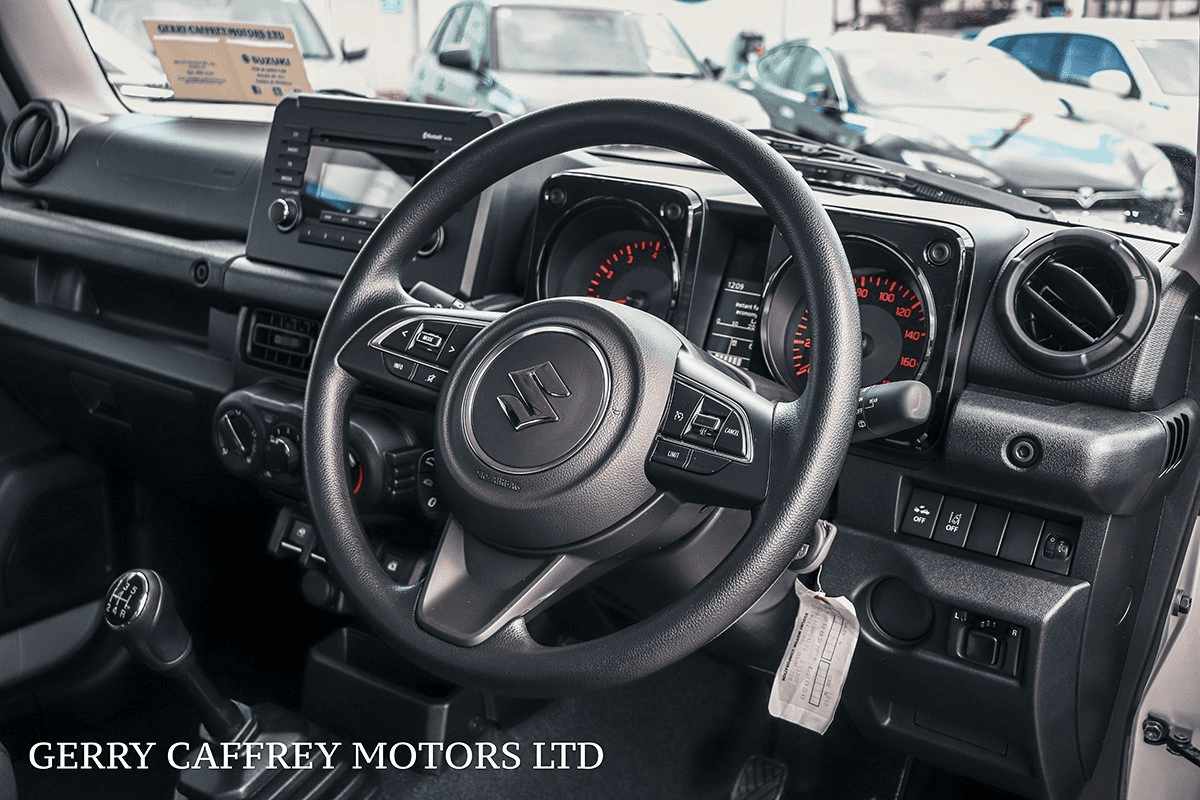
Inside, the Jimny features a stylish black interior with minimal colours to reduce distractions. The controls are designed for easy operation even when wearing gloves. The iconic round headlamps are LED headlamps with washers to keep them clear of stone chips and dirt.
Other practical exterior features include drip rails on the roof edges to prevent water ingress when opening doors and wheel arch extensions to protect the body from stone chips. The Jimny's heritage is visible in its distinct Jimny look, inspired by past legends and its solid foundation built on a ladder frame.
Recovery gear is recommended for serious off roading to regain grip when stuck on bumpy slopes or beaten track terrain, underscoring the importance of grip for the Suzuki Jimny due to its lightweight and compact design.
Additionally, the new Jimny incorporates a laser sensor as part of its advanced safety features, enhancing its ability to detect obstacles and ensure superior grip in challenging conditions. The forward vehicle detection system works alongside visual warning alerts to keep the driver informed and responsive in urban jungle environments.
For those navigating tight city streets or rugged trails, the Jimny's design ensures that when an obstacle pushes one wheel upward, the axle presses the opposite wheel downward, increasing tyre contact and grip. This axle presses mechanism is a key factor in why the Jimny ensures superior grip off-road and on slippery surfaces.
Whether tackling muddy paths or the urban jungle, the new Jimny's combination of mechanical and electronic aids helps maintain control and confidence, making it a reliable companion for diverse driving conditions.
Pricing and Financing Options
Used Suzuki Jimny prices start at £17,995, with lightly used models often costing £25,000 or more due to their rarity and demand. The Light Commercial Vehicle (LCV) version of the Jimny is priced under £17,000 before VAT, making it an attractive option for business users.
Suzuki Financial Services offers flexible financing options to help customers find manageable payment plans. Driveaway pricing typically includes registration and insurance costs, providing transparency and convenience for buyers.
Additional Off-Road and Grip Features
Lowering tire pressure increases the contact patch, improving grip on loose surfaces such as mud and gravel. This adjustment allows the Jimny to better float on soft surfaces rather than sinking, a benefit of its lightweight chassis design.
The Jimny's part-time four-wheel-drive system includes a 2H mode that directs power exclusively to the rear wheels for standard road driving, enhancing fuel efficiency and reducing drivetrain wear when four-wheel drive is unnecessary.
Interior Design and Practicality
The Jimny's cabin features hard, black plastics that emphasize durability and ease of cleaning, fitting its utilitarian and simple interior design. Upper trim levels include a touchscreen infotainment system that adds modern convenience and connectivity.
Rear seats can be folded down to increase cargo space, enhancing the vehicle's practicality for carrying gear or luggage.
These combined features and options make the Suzuki Jimny a versatile and capable vehicle, balancing rugged off-road ability with everyday usability.

Our Passion for Jimnys is backed by 35+ years of Suzuki Heritage.
The Jimny Co is a sub-brand of Gerry Caffrey Motors — Ireland’s longest-standing Suzuki dealership.
© The Jimny Co 2025
01 490 1134
106 - 112 Terenure Road North,
Dublin 6W, Ireland, D6WWR13