Jimny Autumn Check: 8 Things We’d Look at Now
2nd Sept 2026 14 minute read

Autumn in Ireland has a way of arriving all at once. One week it’s a bright run through Wicklow; the next it’s dark school-run traffic, standing water on the M50 and leaves gathering along South Dublin roads.
That makes now the right time for a proper Jimny autumn check. The Suzuki Jimny is a tough, simple car and very capable, but good maintenance is what keeps it dependable when the roads turn wet and the mornings get colder.
In our experience, the best checks are the ones done before there’s a warning light, a slow start or an NCT deadline in the diary. Here are the eight areas we’d look at first.
Your Quick Suzuki Jimny Autumn Checklist
Tyres: tread, pressure, condition and the spare. Inspect tire tread depth to ensure grip on wet roads and rotate tyres every 10,000 km to prevent uneven wear.
Wipers and washers: clean sweep, strong jets and winter-ready screenwash. Consider a winter-grade windshield washer fluid for the season.
Battery: starting strength, terminals and charging health. Replacement cost can vary depending on brand.
Lights and visibility: every lamp, clean lenses and a clear windscreen.
Fluids and service items: oil changes, coolant, brake fluid, diff oil, plugs, and service schedule. Change oil every 5,000 km for off-road use. Check brake fluid levels and listen for abnormal sounds.
Brakes, steering and suspension: noises, vibration, pulling and pothole damage. Brake issues are common across all generations of Jimny.
Underbody: corrosion, leaks, impact marks, protection and rust prevention. The underside should be protected against corrosion and rust. Underseal treatment is crucial for Japanese imports. Regular washing extends the chassis life of a Jimny. Monthly checks during winter are recommended for rust prevention.
4WD, accessories and NCT readiness: test what you’ll rely on before winter.
1. Start With a Proper Jimny Tyre Check
Tyres do more than any accessory to determine how your Jimny stops, steers and grips. That matters on greasy roundabouts in Dublin, leaf-covered backroads and wet climbs towards the Dublin Mountains, where its compact size also helps on narrow roads and in town.
Check the tread across the full width of all four tyres, not just the outside edge. The legal minimum tread depth in Ireland is 1.6 mm, while AA Ireland recommends considering replacement below 3 mm as winter approaches.
Look for cuts, bulges, cracking and uneven wear. If one shoulder is wearing faster, the issue may be pressure, alignment or a worn suspension component rather than the tyre alone.
Check pressures when the tyres are cold and use the correct figure for your exact Jimny model, wheel and load in the owner’s handbook or vehicle placard.
Don’t forget the rear-mounted spare. A spare with no air isn’t much help on a wet roadside.
Rotate tyres every 10,000 km to prevent uneven wear and maintain optimal fuel consumption.
2. Check Your Jimny Wipers and Washer System
A Jimny wiper check takes two minutes and can transform a miserable wet drive. If the blades smear, chatter, skip or leave unwiped bands, replace them before the next spell of heavy rain.
Run the front and rear washers, check that each jet lands correctly and top up with proper winter-grade screenwash. Plain water struggles with oily road film and may freeze when temperatures drop.
Clean the inside of the glass as well. Low autumn sun through a greasy windscreen can be just as difficult as rain, particularly in stop-start traffic around Terenure, Rathfarnham and Dublin city centre.
3. Test the Jimny Battery Before the Cold Mornings
A Jimny battery can seem perfectly healthy in mild weather and then struggle on the first properly cold morning. Slow cranking, dim lights during start-up or repeated jump-starts are signs that it should be tested.
We often see batteries suffer when a Jimny mainly does short urban trips. Lights, demisters, heaters and wipers add demand, while a brief commute may not give the charging system enough time to recover what starting used.
Check that the battery terminals are secure and free from corrosion. If the battery’s age is unknown, a workshop load test gives a much clearer answer than waiting to find out on an early Monday morning.
4. Make Sure Every Light Is Doing Its Job
Autumn means more driving in darkness, drizzle and road spray. Check dipped and full beams, sidelights, indicators, hazards, brake lights, the rear fog light, reverse lights and the number-plate lamp.
Ask someone to stand outside while you operate the controls, or use a reflection in a window or garage door. Clean muddy lenses and check the headlamp aim if other drivers regularly flash you.
Don’t ignore the windscreen itself. A chip can spread when temperatures change, and a damaged or heavily marked screen may become an NCT issue if it affects the driver’s view.
5. Review Fluids and Routine Jimny Maintenance
Lift the bonnet when the vehicle is parked safely on level ground and the engine is cold. Check the engine oil, coolant reservoir, brake-fluid level, diff oil, and screenwash, following the handbook for the correct method and specifications.
A low level can be a symptom, not simply a top-up job. If oil, coolant or brake fluid keeps dropping, have the cause investigated rather than repeatedly adding more.
This is also the moment to check when the Jimny was last serviced, and to confirm the handbook matches the exact variant and engine size for any service needs or fluid specs. Mileage matters, but time, short journeys, towing, mud, dust and regular off-road driving can all justify closer attention.
Spark plugs are a vital part of ensuring smooth engine performance, especially as temperatures drop. Worn or fouled plugs can cause misfires and slow starts, so checking or replacing them is an important step in autumn maintenance.
Change oil every 5,000 km for off-road use to maintain engine health and avoid neglected drivetrain oil that can shorten the vehicle's lifespan.

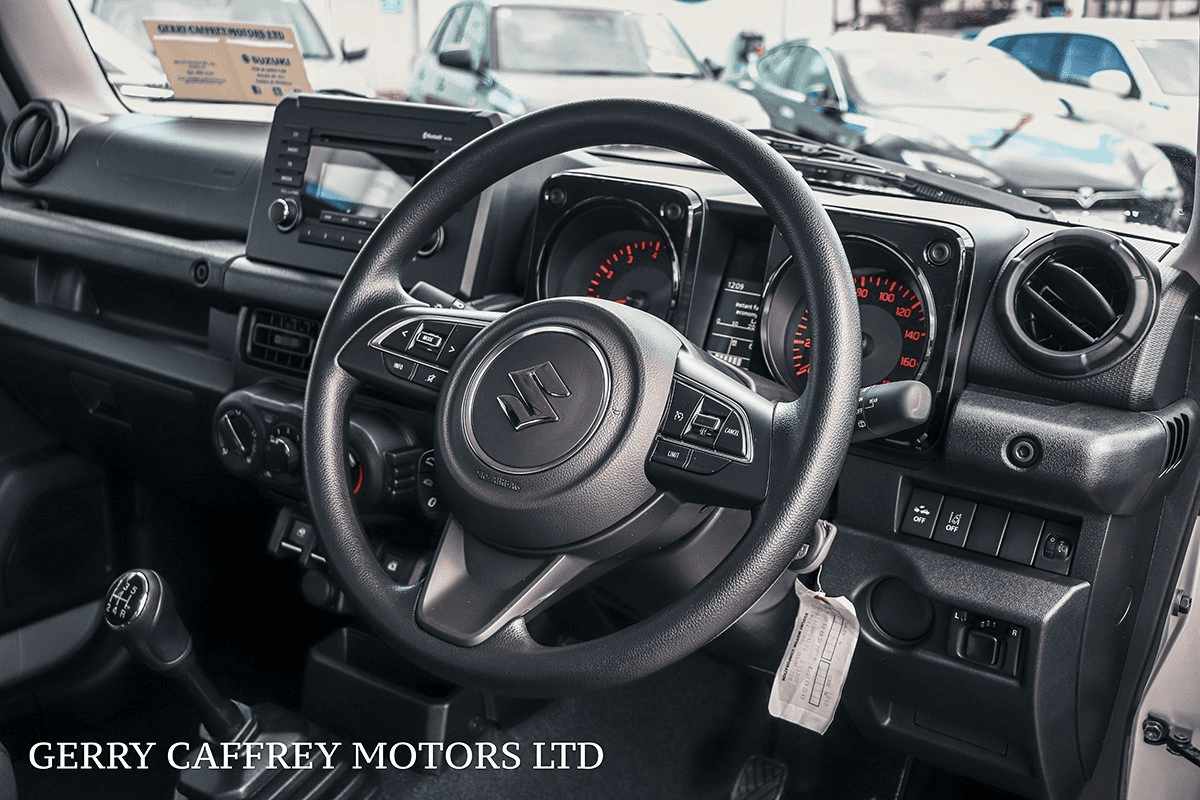
6. Listen to the Brakes, Steering and Suspension
Irish roads can be hard on a compact 4x4. Potholes, broken edges and rough lanes place a steady load on tyres, wheel alignment, bushes, dampers and steering joints.
On a safe, familiar road, notice whether the Jimny pulls under braking, vibrates through the steering wheel or makes new clunks and knocks. A soft brake pedal, grinding noise or change in stopping performance needs prompt professional attention.
Check brake fluid levels regularly and listen for abnormal sounds as brake issues are common across all generations of Jimny.
If you’ve fitted larger tyres, different wheels, a suspension lift as an upgrade, or extra off-road kit, an inspection is even more useful. Accessories change loads and clearances, so installation quality and fastener condition matter as much as the parts themselves.
7. Give the Jimny Underbody a Careful Inspection
The Jimny underbody deserves more than a quick glance, especially for owners using it on rough Irish roads. Look over the chassis, mounting points, brake and fuel lines, suspension components, exhaust, differential housings and transfer case for corrosion, damage or fresh leaks.
In our experience, this is especially worthwhile on a Jimny that has spent time near the coast, crossed muddy tracks or been driven through standing water. Salt, sand and packed mud hold moisture where you don’t want it.
Japanese-market vehicles were prepared for a different climate and road-treatment environment, so underbody protection should be assessed on the individual vehicle.
A proper clean, dry inspection should come first so vulnerable areas can be kept protected before winter. You don’t want to seal moisture or corrosion underneath a fresh coating.
Underseal treatment is crucial for Japanese imports to protect against Irish weather conditions.
After beach use or a muddy day off-road, rinse the underside with fresh water once it’s safe to do so. Check drain points too, as autumn leaves and grit can trap moisture around body seams.
Regular washing extends the chassis life of a Jimny, and washing your Jimny weekly in winter helps combat road salt.
Inspect door and window seals to prevent leaks that can cause interior dampness.
Monthly checks during winter are recommended for rust prevention, as advised by AA Ireland.
Irish weather accelerates rust issues in vehicles, making these checks even more important.
Check drain holes regularly to prevent rust from clogged debris.
Apply anti-rust protection to vulnerable areas of the vehicle to extend its lifespan.
8. Check 4WD Operation, Accessories and NCT Readiness
If you haven’t used four-wheel drive for a while, don’t wait for a slippery climb to discover a problem. Follow the handbook and test the system in an appropriate low-grip setting, never by forcing part-time 4WD on dry, high-grip tarmac.
Inspect recovery points, guards, roof racks, awnings, tow equipment and any wiring added for lights or accessories. Tighten or repair items according to the manufacturer’s instructions, and make sure nothing is loose, cracked or fouling a tyre or body panel.
Finally, check your NCT date, service history and insurance coverage. An autumn health check isn’t a substitute for an NCT or scheduled service, but it gives you time to fix worn tyres, poor lights, damaged wipers or suspension issues without a last-minute rush.
What About an Imported Jimny?
With an import, condition and paperwork both matter. Before purchase, you want to know what you’re buying; after arrival, you want the vehicle properly registered and prepared for Irish ownership.
At The Jimny Co, we handle the full process for customers: finding the right Jimny in Japan, arranging inspection and shipping, managing VRT and Irish registration, and providing warranty support.
That means you’re not left trying to connect the auction report, logistics and Revenue requirements yourself.
VRT is generally paid when a vehicle is registered in the State. The exact process and amount will depend on the individual vehicle and the Revenue rules in force at the time. Import choice can also come down to preferred engine size for the vehicle.
We can also discuss finance and trade-ins, whether you’re moving from another 4x4 or upgrading an existing Jimny.
Flexible finance options are available for purchasing a Jimny, and trade-in solutions can help reduce the purchase price of a Jimny.
Suzuki vehicles generally offer affordable insurance and low running costs, making them a smart choice for Irish drivers.
Gerry Caffrey Motors has been established since 1987 and offers trusted Suzuki service and support.
If the exact colour, trim or specification isn’t in stock, we can source the right Jimny model to your brief and talk through sensible accessories for Dublin driving, touring or off-road use.
Ready for the Wetter Months?
A careful Jimny tyre check, fresh wipers, a healthy battery and a clean underbody won’t make Irish autumn weather disappear.
They will make it much easier to expect and enjoy the Jimny for what it is: a compact, characterful 4x4 that owners value for its sure-footed feel in Irish conditions, from Dublin streets to Wicklow tracks.

Our Passion for Jimnys is backed by 35+ years of Suzuki Heritage.
The Jimny Co is a sub-brand of Gerry Caffrey Motors — Ireland’s longest-standing Suzuki dealership.
© The Jimny Co 2025
01 490 1134
106 - 112 Terenure Road North,
Dublin 6W, Ireland, D6WWR13