Low Mileage Jimny? Great — But That’s Not the First Thing We Look At
31st Aug 2026 12 minute read

A low-mileage Suzuki Jimny will always catch a buyer’s eye. Fewer kilometres usually sound like less wear, better value, and an easier ownership experience. However, mileage alone doesn’t tell the full story.
When we inspect a used Suzuki Jimny, the first thing we consider is its overall condition. How has it been maintained? Where has it been driven? Has it been stored properly? And do the mechanical condition, bodywork, and paperwork support the mileage shown?
A well-maintained Jimny with 70,000 km can be a much better buy than a neglected example showing 30,000 km.
Buying a Used Jimny: Why Condition Beats Kilometres
The Jimny is built differently from the average compact SUV. It uses a rigid ladder-frame chassis, solid axles with coil springs, and a selectable four-wheel-drive system with low-range gearing. These features give it genuine off-road ability, not just rugged styling. Suzuki Global explains the Jimny’s underlying 4x4 design in more detail.
This off-road performance means some Jimnys have lived tougher lives than their odometers suggest.
A low-mileage vehicle may have spent years doing short urban trips around Dublin. Another might have been used extensively on farms, forestry tracks, or coastal roads. It could have covered very few kilometres while being regularly exposed to mud, moisture, salt, and rough terrain.
In our experience, inspecting the vehicle underneath reveals far more than the mileage display.
What We Check Before Mileage
Chassis and Underbody Condition
The Jimny’s ladder-frame chassis is central to its toughness and character, so its condition matters enormously.
We carefully inspect the chassis rails, mounting points, crossmembers, and underbody for corrosion, damage, and signs of poor-quality repair work. Surface marks are common on a used 4x4, but deeper corrosion, crushed sections, or fresh underseal hiding previous damage require close attention.
Irish weather can be harsh. Regular rain, damp storage, coastal air, and winter road treatments accelerate rust, especially if the underside hasn’t been cleaned or maintained.
This is why a detailed condition inspection matters more than a headline mileage figure.
Accident Repairs and Paintwork
Clean-looking paint doesn’t automatically mean original paint.
We check panel alignment, paint consistency, door shuts, welds, and mounting points. Uneven gaps or variations in paint finish can indicate previous repair work, even if the vehicle photographs beautifully.
A properly repaired cosmetic mark isn’t necessarily a deal-breaker. The key questions are what happened, how extensive the damage was, and whether the repair was done well.
Signs of Heavy Off-Road Use
The Jimny excels off-road, and many owners buy one for that reason.
Off-road use isn’t a problem by itself, but poorly managed off-road use is.
We look for damage around the differentials, suspension components, bumpers, and sill areas. Mud packed into hard-to-reach spaces suggests the vehicle hasn’t been cleaned after trail or farm use.
Tyres tell a story too. Aggressive off-road tyres, uneven wear, or mismatched brands may indicate alignment issues, suspension wear, or modifications needing further check.
Jimny Service History: What the Records Should Tell You
A strong service history should support what we see during inspection.
Service stamps help, but invoices and workshop records offer more detail. They show when fluids, filters, brakes, tyres, and other wear items were replaced. They may reveal recurring issues or long gaps between visits.
We often see very low-mileage cars serviced by distance but not by time. Engine oil, brake fluid, coolant, and rubber parts age even if the vehicle isn’t driven much.
For imported Jimnys, we review Japanese records, inspection documents, and paperwork before committing. Mileage, interior wear, and mechanical condition should all align.
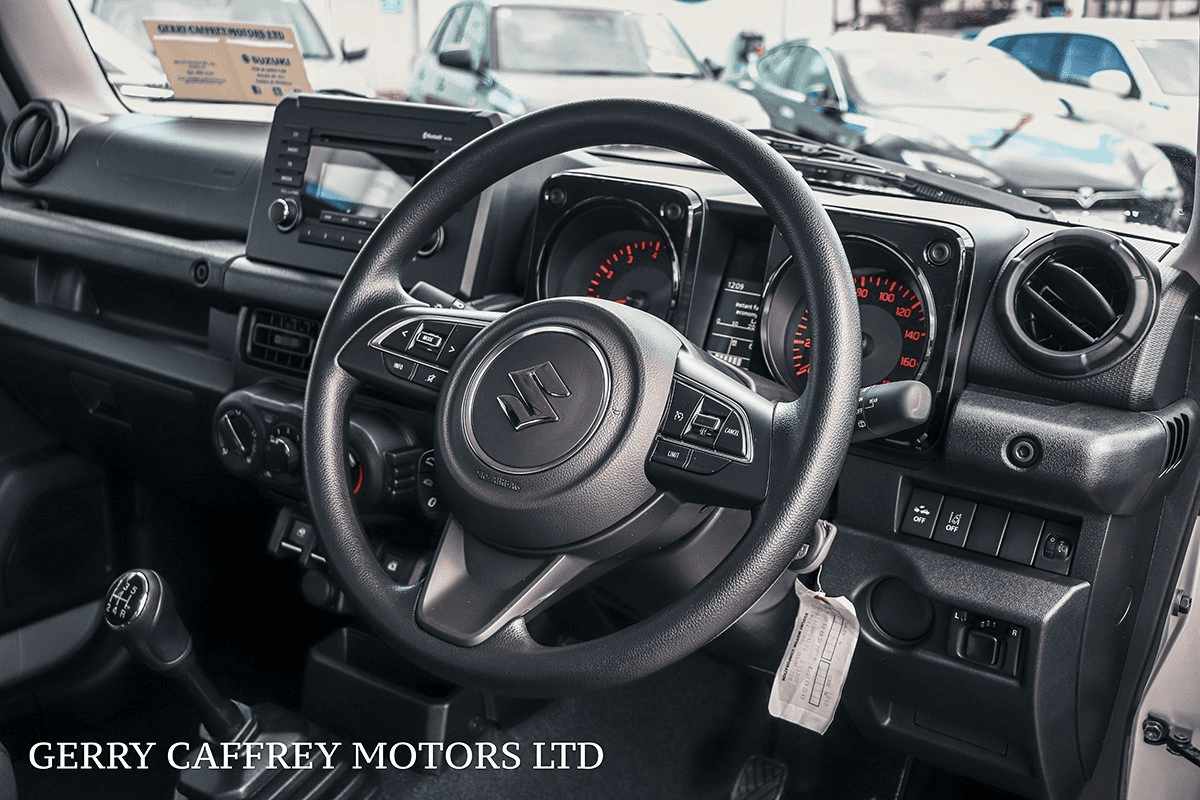
If the steering wheel, driver’s seat, and pedals show heavy wear but the odometer is unusually low, that mismatch raises a red flag.
Mechanical Checks That Matter on a Used Suzuki Jimny
A proper inspection covers much more than whether the engine starts cleanly.
We assess:
Engine condition, fluid levels, and visible leaks
Clutch operation or automatic gearbox behaviour
Steering feel and unwanted vibration, including checking for the "Jimny Death Wobble"
Suspension wear and unusual noises
Brake condition and tyre age
Wheel bearings and drivetrain components
Operation of the four-wheel-drive system, including low-range gearing
Electrical equipment and warning lights
Heating, air-conditioning, and cruise control
Modifications and accessory installation
The four-wheel-drive system should engage correctly. If the vehicle has hill descent control and hill hold control, those features must be tested, not just assumed functional because the dashboard light is on.
A test drive is essential. Dublin streets, ramps, and uneven surfaces reveal suspension noises, steering play, and drivetrain behaviour that won’t appear stationary.
We also check for worn kingpin bearings and bushings that can cause steering issues, inspect rubber seals and weatherproofing for deterioration, and check for leaks around the transfer case and front swivel hubs.
Is an NCT Enough When Buying a Used Jimny?
A valid NCT is important but shouldn’t replace an independent inspection.
The NCT confirms a vehicle met roadworthiness at test time. It doesn’t assess long-term mechanical health, previous off-road use, or repair quality.
It also won’t tell you if a Jimny represents good value.
Treat the NCT certificate as one part of the paperwork, not a full condition report.

What About a Low-Mileage Imported Jimny in Ireland?
Japan offers a wider choice of Suzuki Jimny models, colours, trims, and transmissions than the Irish used market.
However, importing involves more than finding an auction listing. The vehicle must be selected carefully, inspected, transported, cleared, registered, and prepared for Irish roads.
Japan has strict vehicle inspection standards for imports, ensuring vehicles are well maintained with documented history and lower average mileage.
Importing a Jimny can cost between $3,000 and $30,000, with shipping typically taking 3 to 6 weeks.
Revenue states Customs Duty applies to vehicles imported from outside the EU. Proof of Customs Duty and VAT payment is normally required during registration, while VRT is generally payable when the vehicle is registered in Ireland. Revenue’s VRT guidance outlines current tax requirements.
For private imports, Revenue requires an NCTS appointment within seven days of entry and registration within 30 days.
That paperwork can be stressful if you haven’t done it before.
At The Jimny Co, we handle the entire process for customers:
Discuss your preferred generation, colour, transmission, and specification.
Search trusted Japanese sources for suitable vehicles.
Review condition, history, and inspection info before purchase.
Arrange shipping and import logistics.
Manage VRT and Irish registration.
Prepare the Jimny for collection in Dublin.
Provide warranty support and help with finance, trade-ins, and accessories.
Read more about importing Jimnys from Japan to Ireland.
Low Mileage Still Matters — Just Not on Its Own
Mileage remains useful. All else equal, a lower-mileage Jimny may have less mechanical and interior wear.
The problem is all else is rarely equal.
Imagine choosing between these two vehicles:
Jimny A: 32,000 km, limited service records, visible underbody corrosion, evidence of hard off-road use.
Jimny B: 68,000 km, documented service history, clean chassis, consistent mechanical maintenance.
For most buyers, Jimny B is stronger. Its higher mileage is supported by better care and transparent history.
That’s why we consider mileage alongside age, condition, maintenance, previous use, and price. No single number should decide.
Don’t Forget How You’ll Actually Use Your Jimny
The right Jimny depends on your plans.
If it’ll spend most time around Terenure, Rathfarnham, or South Dublin, comfort, transmission choice, cruise control, and parking practicality matter.
If you’re heading to Wicklow, using farmland, or building for off-road weekends, tyres, ground clearance, hill descent control, hill hold control, underbody protection, and accessories become important.
We help source and prepare Jimnys tailored to your use, including wheels, all-terrain tyres, roof storage, styling upgrades, or protection, all compliant with Irish roads and NCT.
Finance and trade-ins are also options. Our guide to financing imported Jimnys explains main options for Irish buyers.
Questions to Ask Before Buying a Used Jimny
Before committing, ask:
Is the mileage documented and consistent with condition?
Is there a detailed service history?
Has the chassis been inspected for rust and corrosion?
Are there signs of accident repair or heavy off-road use?
Does the four-wheel-drive system operate correctly, including low-range and hill descent control?
Are any modifications road-legal and professionally fitted?
Is the imported vehicle fully registered and compliant in Ireland or the UK?
What warranty or after-sales support is included?
Has the total cost accounted for shipping, Customs, VAT, VRT, and preparation?
Clear answers matter more than an unusually low odometer reading.
Find the Right Jimny, Not Just the Lowest-Mileage One
A great used Suzuki Jimny feels honest. Condition, history, mileage, and price support one another.
The best purchases aren’t always the lowest-mileage Jimnys. They’re the ones carefully selected, properly inspected, and prepared for their next owner.
Thinking about importing a Jimny? We handle everything—from sourcing in Japan to inspection, shipping, VRT, Irish registration, and warranty support in Dublin. Contact The Jimny Co and tell us your ideal Jimny.
Additional Facts About the Suzuki Jimny
The Suzuki Jimny has been in production since 1970, with approximately 2.85 million units sold globally since then. It weighs less than many compact SUVs, which enhances its off-road performance and agility.
The Jimny is known as one of the most compact SUVs with genuine off-road capability, thanks to its ladder-frame chassis and solid axle suspension.
Used Suzuki Jimnys are often modified with larger tires or suspension lifts to improve off-road ability.
Currently, there are around 322 used Suzuki Jimny cars available in the UK, with prices ranging from £1,650 to £23,999. Official sales of the Jimny in the UK ended in 2021, increasing demand for used models in both Ireland and the UK.
The Suzuki Jimny has four main generations:
First generation: 1970 to 1981
Second generation: 1981 to 1998
Third generation: 1998 to 2018
Fourth generation: 2018 to present
The Jimny's fuel economy averages in the mid 30s (mpg), and it has a modest insurance premium due to its small engine and size. Its payload capacity is limited to just 150kg, reflecting its compact off-road design.
The Jimny has a 9,000-mile service interval, and its simple mechanics allow many owners to perform independent servicing. Regular inspection and testing of the four-wheel-drive system, especially on loose surfaces, is important to ensure operational integrity.
Common mechanical issues to watch for include worn kingpin bearings and bushings that cause steering problems, sitting rot in low-mileage vehicles due to inactivity, and leaks around the transfer case and front swivel hubs.
Overall, the Jimny is celebrated for its reliability and ruggedness as a small off-roader, favored by enthusiasts who value its unique combination of compact size, off-road prowess, and mechanical simplicity.

Our Passion for Jimnys is backed by 35+ years of Suzuki Heritage.
The Jimny Co is a sub-brand of Gerry Caffrey Motors — Ireland’s longest-standing Suzuki dealership.
© The Jimny Co 2025
01 490 1134
106 - 112 Terenure Road North,
Dublin 6W, Ireland, D6WWR13