Your Jimny Feels More Bouncy Than Usual — What Could Have Changed?
28th Aug 2026 16 minute read
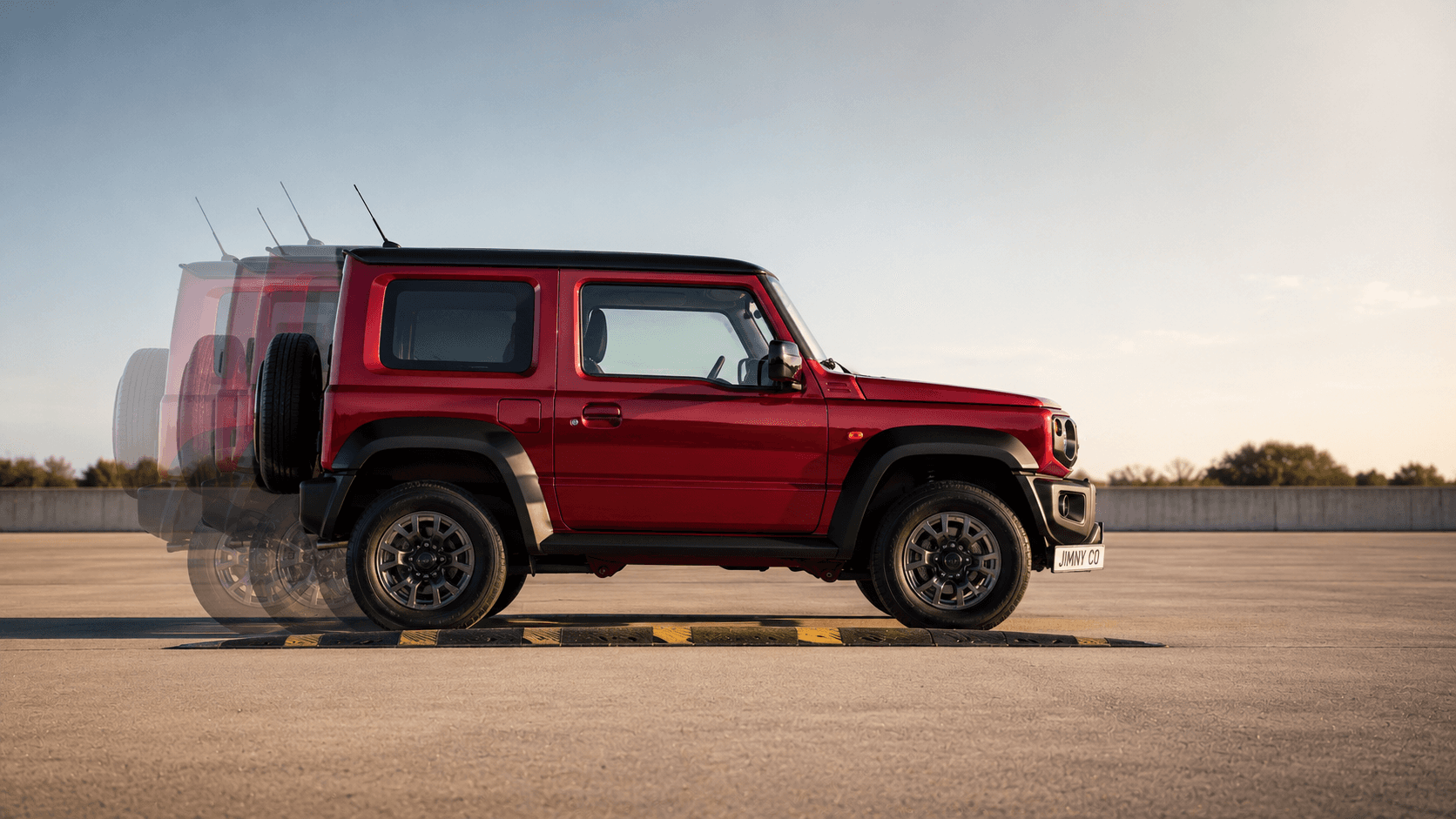
A Suzuki Jimny has a naturally lively ride. It’s a compact, short-wheelbase 4x4 with proper off-road hardware, so it won’t glide over a patched Dublin road like a long-wheelbase SUV.
But if your Jimny suddenly feels more bouncy than usual, that change matters. Extra movement after a South Dublin speed ramp, a floaty feeling on the N11 or repeated hopping over broken back-road surfaces can point to something as simple as tyre pressure — or wear in the suspension.
In our experience, the best clue is timing. Ask what changed just before the ride felt different: new tyres, a service, a heavy load removed, off-road driving, accessories fitted or a hard pothole impact.
First, Know What a Normal Jimny Ride Feels Like
The Jimny is engineered differently from most road-focused crossovers. Suzuki uses a ladder frame chassis and a three-link rigid-axle suspension with coil springs, a layout designed to maintain traction and wheel contact on rough ground.
That gives the Jimny its genuine off-road ability. However, the short wheelbase and relatively light body also mean you’ll feel sharp ridges, drain covers and closely spaced bumps more clearly.
A small amount of pitching is part of the Jimny’s character. What isn’t normal is a clear, recent change: two or three extra rebounds after a bump, a corner that feels less settled, knocking underneath or one end of the vehicle sitting lower.
What Makes a Jimny Feel More Bouncy?
1. Tyre Pressures Have Changed
Start here, because it’s quick and surprisingly common. Overinflated tyres can make the Jimny skip and feel sharp over potholes, while underinflated tyres may make it feel vague, soft and slow to settle.
We often see pressures altered during tyre fitting or servicing, then left at a generic workshop setting rather than the vehicle manufacturer’s recommendation. Irish temperature changes can also shift pressures, and a slow puncture may affect one corner, often the rear left, before the warning is obvious.
Check all four tyres when cold and follow the pressure label for your exact model, tyre size and load. Don’t copy a figure from another Jimny or rely on the maximum pressure moulded into the tyre sidewall.
2. The Load in the Jimny Is Different
A light, empty Jimny will usually feel livelier than one carrying camping equipment, tools or other gear. If you’ve just emptied the boot after a weekend in Wicklow, the vehicle may simply have returned to its normal unladen feel.
The reverse can also happen. Heavy equipment, a drawer system or constant towing-nose weight can compress the rear Jimny springs and reduce the available suspension travel. This may cause the vehicle to hit its bump stops and rebound sharply.
Secure loose items before diagnosing a knock. A jack, recovery shackle or badly secured tool case can sound remarkably like a suspension fault on uneven Irish roads.
3. The Jimny Shock Absorbers Are Worn or Damaged
Springs support the vehicle’s weight, while shock absorbers control how quickly the suspension moves. If the damping weakens, the spring keeps oscillating after the wheel passes over a bump — the classic “bounce, bounce, settle” feeling.
Worn Jimny shock absorbers may also cause:
Repeated rebounding after a speed ramp
More body movement under braking
A floaty or unsettled motorway feel
Uneven tyre wear
Oil running down a shock body
Knocking from a worn bush or loose mounting
A light mist on a shock isn’t necessarily the same as an active leak. Ireland’s NCT inspection guidance distinguishes between a slight oil film and oil running down the unit.
The NCT also checks shock absorber condition, security, leakage and damping imbalance.
Don’t wait for the NCT if the change is obvious. A valid test certificate is a snapshot from the test date, not proof that a shock absorber couldn’t have failed afterwards.
4. A Coil Spring Has Sagged, Shifted or Broken
Jimny springs are tough, but age, corrosion, repeated heavy loading and rough use all take a toll. A broken end coil can be difficult to spot while the vehicle is sitting on the ground.
Look for one corner sitting lower, a metallic clunk, fresh rust where a coil has fractured or a spring that no longer sits correctly in its seat.
Wet Irish winters, road grit and trapped mud can accelerate corrosion around the springs and their mounting areas.
If one spring is damaged, the vehicle should be inspected before normal driving continues. Replacement springs are commonly fitted in axle pairs so the height and spring rate remain balanced, although the correct repair depends on the model and condition of the full setup.
5. Bushes or Suspension Mounts Have Developed Play
The rigid axles are located by arms and links with rubber bushes. As those bushes wear, the axle can move more than intended, creating a loose, wandering or jarring sensation that owners sometimes describe as bounce.
Panhard-rod bushes, suspension-arm bushes and shock mounts are all worth checking. Cracked rubber, excessive movement or a knock when changing from braking to acceleration can help narrow down the problem.
This is where a Jimny-specific inspection helps. Replacing the shock absorbers won’t cure unwanted axle movement caused by a worn bush.
6. New Tyres or Wheels Have Altered the Ride
A change in tyre construction can transform Jimny ride quality. A tougher all-terrain tyre may have a stiffer sidewall and greater unsprung weight than the road tyre it replaced.
A larger wheel can also leave less tyre sidewall to absorb sharp impacts.
Aggressive off-road tyres may feel lumpy until they warm up, particularly after the Jimny has been parked in colder weather. Wheel balance, tyre defects and incorrect pressures should be checked if the change began immediately after fitting.
Tyres and suspension work as a system. Choose a setup for how you actually use the vehicle — city driving, long road trips, farm access or regular off-road trails — rather than appearance alone.
7. A Lift Kit or Heavy Accessory Has Changed the Suspension Balance
Lift springs, longer shocks, roof racks, steel bumpers and winches can all change how a Jimny moves. That doesn’t make modification a bad idea, but the components need to work together.
For example, uprated springs paired with unsuitable dampers may feel under-controlled. A heavy roof load raises the centre of gravity and increases side-to-side movement, while a winch or bumper adds permanent weight at one end.
In our experience, the best Jimny suspension setup is the one matched to the vehicle’s real constant load. Tell the installer what stays on the Jimny every day, not what might be fitted for one trip each year.
Common Jimny Suspension Problems Explained
Jimny suspension problems often stem from the stock suspension being too soft for certain driving styles or loads. Jimny owners frequently report issues like body roll, instability in crosswinds, and a tendency to bounce excessively on rough roads.
The stock suspension, while designed for off-road articulation and clearance, can feel harsh or unstable on tarmac, especially with larger tyres or added weight.
Worn components such as bushings, shock absorbers, and coil springs degrade ride quality and stability over time. The rigid axle and ladder chassis design transmit road imperfections directly into the cabin, making suspension condition critical.
A common issue with lifted Jimnys can be steering stiffness and alignment problems. Aftermarket lift kits can lead to increased steering problems if geometry is not corrected.
Kingpin bearings commonly fail due to contamination from water and dirt. Replacing worn kingpin bearings can prevent steering instability.
Jimny's tendency for a driver's side lean is often due to fuel tank positioning and driver weight.
Upgrading to heavy-duty polyurethane bushings can improve joint stability.
Death Wobble typically happens between 60 km/h and 80 km/h after hitting a bump. The "Death Wobble" is a severe steering oscillation occurring at specific speeds.
Worn or leaking shock absorbers can cause nose-diving under braking.
The OEM suspension components cost approximately Rs. 14,840.
Suspension Lift Kits: Brands and Options
Upgrading the Jimny suspension with a suspension lift can improve clearance, wheel travel, and stability. Popular brands among Jimny owners include Tough Dog, Iron Man, Black Raptor, Dobinsons, and Showa Garage.
Most kits offer a lift ranging from 20mm to 50mm, with options like the OME 40mm lift for light loads and Dobinsons 50mm for heavier loads. OME 40mm lift springs maintain standard spring rates.
The Iron Man Nitro Gas kit is popular for city driving with occasional off-road use, while Foam Cell Pro and M2.5 monotube shocks cater to harsher conditions and sportier handling.
Proper installation includes upgrading brake hoses and considering crossmember clearance to avoid interference with the driveshaft during suspension droop.
How Stock Suspension Compares to Upgraded Kits
Stock suspension provides adequate articulation and clearance but lacks the stiffness and stability desired by many Jimny owners, especially in India and Australia where off-road driving and carrying loads are common.
Upgraded kits increase suspension stiffness, improve geometry, and aid stability by correcting caster angles and adding components like panhard relocation brackets.
The difference in ride quality can be significant, with better control, less body roll, and improved wheel articulation.
The Role of Caster and Suspension Geometry in Stability
Caster angle is crucial for steering stability and self-centering. Stock Jimny caster is about 1.9 degrees positive, but suspension lifts alter this angle, often making it more negative.
Correcting caster is essential to avoid steering stiffness and instability. This is achieved via adjustable bushes or replacement radius arms.
Suspension geometry, including toe and panhard rod alignment, also affects stability and handling. Most kits include components to maintain or restore proper geometry.
Maintenance Tips for Jimny Suspension Components
Regular inspection of shock absorbers, coil springs, bushes, and mounts helps maintain ride quality and safety.
Look for oil leaks on shocks, cracked or worn rubber bushes, sagging springs, and loose mounts.
Wheel alignment focusing on toe adjustment should be done after suspension work or if handling issues arise.
How Driving Style Affects Suspension Wear
Aggressive off-road driving, frequent heavy loading, and driving on poorly maintained roads accelerate wear on suspension components.
Jimny owners who plan to achieve maximum off-road articulation may prefer softer spring rates and advanced shock absorbers like Koni or Bilstein for better control.
Upgrading for Larger Tyres: What You Need to Know
Fitting larger tyres affects suspension geometry and clearance. Without extended bump stops and proper lift, larger tyres can rub on the chassis or bodywork.
Suspension lifts increase clearance but may require extended brake hoses and crossmember modifications.
Choosing the right lift and suspension components ensures stability and drivability with larger tyres.
What You Can Check Safely at Home
Park on firm, level ground and give the Jimny a simple visual check in daylight. Compare the gap above each tyre, look for an obvious lean and check for loose cargo or a hanging component.
You can also check the cold tyre pressures, look for a visibly damaged spring and note any oil running down a shock absorber.
Record when the problem occurs. Does it seem to come from the front or rear? Is it worse on the left or right? Does it happen under braking, acceleration or after a particular type of bump?
Don’t crawl beneath an unsupported vehicle, loosen suspension parts or rely on a roadside jack for access. A push-down “bounce test” may reveal poor damping, but it can’t confirm which part has failed.
When Should You Stop Driving?
Arrange an urgent inspection if the Jimny keeps bouncing after every bump, pulls or wanders, sits unevenly, makes a heavy knock or shows a broken spring or leaking shock.
The same applies after a severe pothole strike or hard off-road impact.
Until it’s checked, reduce your speed, leave extra braking distance and avoid motorway driving, heavy loads and off-road use. Wet Irish roads leave less margin when the tyres aren’t being controlled properly.
Jimny Maintenance That Protects Ride Quality
Good Jimny maintenance is mostly about spotting small changes early. Check tyre pressures monthly and before a long trip, rinse mud and salt from the underbody, and inspect the suspension after demanding off-road use.
During servicing, ask for the Jimny shock absorbers, springs, bushes, links and mounts to be examined as a complete system.
Wheel alignment and tyre rotation should also form part of your maintenance routine, particularly after a pothole impact or the installation of new suspension parts.
Frequently Asked Questions About a Bouncy Jimny
Is a Suzuki Jimny Supposed to Feel Bouncy?
A Jimny can feel busier over broken surfaces than a road-focused SUV because it’s short, light and built around rigid axles.
A sudden increase in bouncing, repeated rebounds or new instability shouldn’t be dismissed as normal Jimny character.
How Do I Know if My Jimny Shock Absorbers Are Worn?
Typical clues include repeated movement after a bump, extra pitching under braking, a floaty road feel, uneven tyre wear, knocking or visible oil running down a shock body.
A professional inspection is the reliable way to separate a worn damper from a spring, bush, tyre or mounting problem.
Should Jimny Shock Absorbers Be Replaced in Pairs?
Shock absorbers are commonly replaced as an axle pair so the damping remains balanced from left to right.
The workshop should still inspect all four units and the related springs, bushes and mounts before recommending parts.
Will Worn Suspension Fail the NCT?
It can. The NCT checks suspension components for issues such as damage, insecure mountings, obvious leakage, malfunction and excessive left-to-right damping imbalance.
However, you shouldn’t wait for the test date if your Jimny’s behaviour has noticeably changed.
Buying an Imported Jimny Without the Guesswork
Suspension condition is one reason the right sourcing process matters. When we import a Jimny for a customer, we handle the full journey: finding the right vehicle in Japan, arranging inspection and shipping, managing VRT and registration under Irish Revenue rules, and preparing it for handover with warranty support.
We can also talk through accessories, off-road use, finance and trade-ins before the vehicle is specified. That way, tyres, suspension upgrades and constant loads can be considered together rather than added as disconnected parts later.

Our Passion for Jimnys is backed by 35+ years of Suzuki Heritage.
The Jimny Co is a sub-brand of Gerry Caffrey Motors — Ireland’s longest-standing Suzuki dealership.
© The Jimny Co 2025
01 490 1134
106 - 112 Terenure Road North,
Dublin 6W, Ireland, D6WWR13