Jimny Beach Care: 5 Things to Check When You Get Home
21st Aug 2026 10 minute read

A beach day and a Suzuki Jimny are a natural match. Whether you’ve been down around Brittas Bay, parked near the sea in Sandymount or taken the long road home from the west coast, the Jimny’s compact size and proper 4x4 ability make it a brilliant companion.
The part that matters comes after the adventure. Salt, sand and trapped moisture can settle into places you won’t spot during a quick walk-around, and Irish weather rarely gives the vehicle much time to dry.
Good jimny beach care isn’t just about keeping a working 4x4 spotless. It’s about removing corrosive material, checking for damage, and catching small problems before they become expensive—or an unpleasant surprise at NCT time.
Here are the five checks we recommend when you get home.
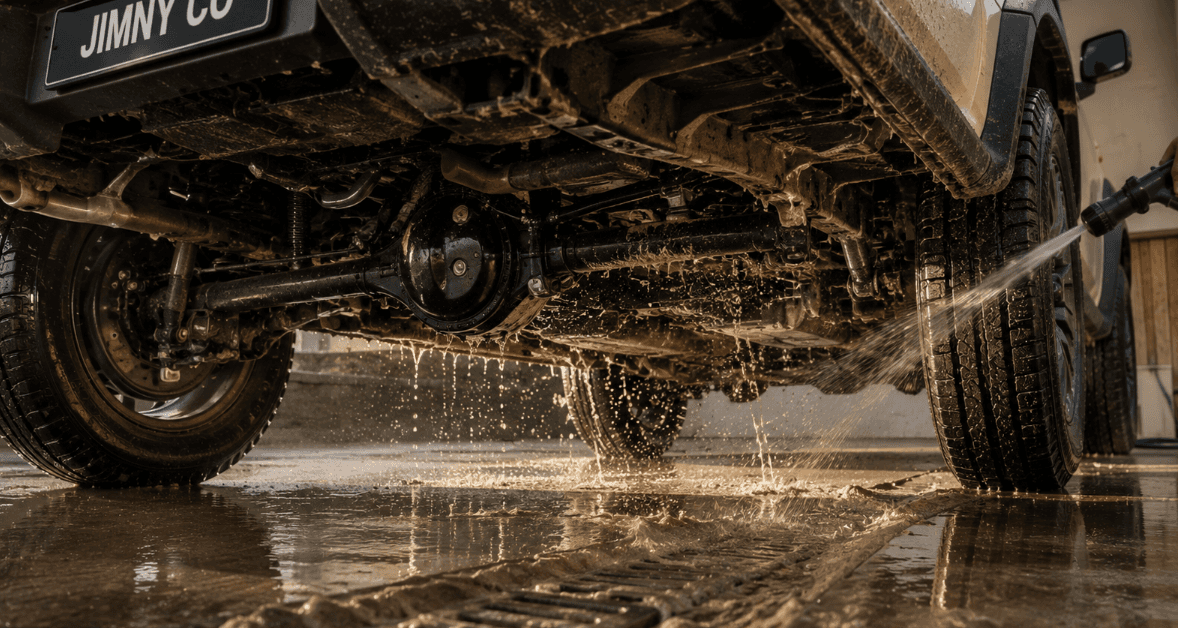
1. Rinse the Jimny’s Underbody With Fresh Water
Start underneath. Even if you stayed well away from the waterline, salt can be carried in damp sand and coastal spray before sticking to the chassis, suspension and other exposed components.
Let the vehicle cool first, then use clean, fresh water to give the underside a slow, thorough rinse. Pay particular attention to the chassis rails, crossmembers, suspension mounting points, axle casings, fuel-tank area and behind any underbody guards.
Don’t just blast the visible surfaces for 30 seconds. Work from different angles and keep rinsing until the water runs clear, because compacted sand can sit on top of ledges and inside awkward recesses.
If you use a pressure washer, keep the nozzle at a sensible distance. Avoid directing high pressure at rubber boots, seals, electrical connectors or breather points.
Why This Matters for Jimny Rust Prevention
The Jimny uses a tough ladder-frame chassis, but tough doesn’t mean immune to corrosion. Salt holds moisture against metal and speeds up the corrosion process, particularly where paint or protective coating has been chipped.
In our experience, regular washing and underbody rinsing is one of the best ways to add years to your Jimny’s chassis life. It’s especially vital after coastal driving, winter road salt, or muddy off-road use.
Once the vehicle is clean and dry, look for fresh scrapes, damaged underseal or early surface corrosion. Our guide to maintaining a Jimny in Irish weather contains more advice for year-round protection.
Underseal treatment is crucial for Japanese imports to protect against rust, and Lanoguard treatment is recommended twice per year for ongoing rust prevention. Bilt Hamber products are also recommended for home application to maintain the underbody protection.
2. Check the Wheels, Tyres, Brakes and Wheel Arches
Sand collects quickly around the wheels. Rinse inside each wheel arch, behind the wheel spokes and around the brake area using low-pressure fresh water once the brakes are cool.
Look closely at the tyre tread and sidewalls. Remove stones or debris that can be lifted safely, and check for cuts, bulges or anything lodged in the rubber.
If you lowered tyre pressures for approved off-road driving, return them to the correct road setting before your next journey. For driving on sand, lower tire pressure to 12-15 PSI for better traction, but remember to reinflate tires using a portable air compressor after beach trips.
Use the pressure specified for your Jimny and load rather than guessing.
Take a short, careful test drive after cleaning. A light film of surface rust on wet brake discs can be normal, but persistent grinding, pulling, vibration or a warning light needs professional attention.
We often see sand packed high inside wheel arches where a quick wash misses it. Left there, it can retain salty moisture and make it harder to spot a loose liner, damaged hose or stone impact.
Consider fitting all-terrain tyres for off-road trails to improve grip and durability.
3. Clean the Body, Seals and Drainage Points
Next, wash the body from the roof down with a car-safe shampoo and plenty of fresh water. Don’t scrub dry sand across the paint; rinse loose grit away first to reduce the risk of scratches.
Open the doors and tailgate, then inspect the shuts, rubber seals and lower seams. Sand tends to hide around hinges, sill edges, bumpers, number-plate recesses and the spare-wheel area.
Check that visible drain holes and channels are clear, but don’t force tools into them. Trapped grit can stop water escaping, which is exactly what you don’t want through a damp Dublin autumn or winter.
Dry the vehicle properly with clean microfibre towels or filtered air. A quality wax or paint sealant can add a useful sacrificial layer, but it won’t replace washing or proper underbody protection.
While you’re there, inspect roof racks, awnings, ladders, recovery points and other accessories. Tighten or repair them to the manufacturer’s specification if anything has shifted. Don’t guess at critical fasteners.
4. Remove Sand and Damp From the Cabin
Beach sand rarely stays in the boot. It works into mats, seat rails, storage pockets and the folds around the rear load area, especially when wetsuits, dogs or children are part of the day.
Take removable mats and wet gear out of the Jimny. Shake the mats away from the vehicle, vacuum the cabin carefully and allow everything to dry before refitting it.
Check beneath the mats and along the boot floor for damp patches. If you find water where it shouldn’t be, inspect the door and tailgate seals rather than covering the area and hoping for the best.
Avoid rubbing wet sand into plastics or seat fabric. Lift loose material with a vacuum first, then use an appropriate interior cleaner.
This part of jimny beach care helps with more than appearances. A dry, tidy cabin makes it easier to notice a leaking seal, protects electrical connections close to the floor and supports the vehicle’s condition at future sale or trade-in time.
5. Carry Out a Post-Beach Mechanical Check
Finish with a calm inspection once the Jimny has been washed and dried. Look underneath for leaks, hanging trim, damaged guards or fresh contact marks that weren’t there before the trip.
Check the engine-oil and coolant levels according to the owner’s manual, with the vehicle parked safely on level ground. Don’t open a hot cooling system.
If it’s been a while since your last engine oil change, this is one thing to consider after salty beach trips to keep your engine running smoothly. Also, check the fuel filter and air filter for any sand contamination, and inspect spark plugs for wear or fouling, as these vital components affect power and fuel economy.
Under the bonnet, look rather than flooding the area with a pressure washer. If fine sand or salt spray has travelled into the engine bay, clean it carefully and keep water away from the intake and electrical components including the battery terminals.
If you drove through unusually deep water, struck something underneath, became bogged down or heard a new knock on the way home, book an inspection. The same applies if steering, braking, transmission or four-wheel-drive operation feels different. Checking the gearbox and transfer box for leaks or damage is also essential after such trips.
Our jimny beach care guide also explains how to prepare your vehicle and choose sensible recovery equipment before your next trip.

Additional Tips for Beach Driving
A Suzuki Jimny's light weight basically allows it to float over sand, making it an excellent vehicle for beach driving. To improve traction, engage 4WD before hitting the sand and maintain momentum while driving. Avoid spinning wheels to prevent digging in, and use a long-handled shovel for clearing sand from under the vehicle if necessary.
Your Quick Post-Beach Check
Before putting the Jimny away, make sure the underbody has been thoroughly rinsed with fresh water. Clear sand from the wheel arches, inspect the tyres and brakes, and wash the body from the roof down.
Clean the door shuts, seals and drainage channels before removing wet gear from the cabin. Vacuum the interior, dry beneath the mats and finish by checking the fluids, guards, accessories and vehicle controls.
If the Jimny entered seawater, shows visible damage or develops a warning light, skip the DIY diagnosis and have it professionally assessed.
Coastal Driving, Access and Irish Road Rules
A Jimny 4x4 gives you capability, not automatic permission to drive on every beach. Obey local signs, access restrictions, environmental protections and any instructions from the relevant local authority or landowner.
AA Ireland advises drivers to follow beach signage and take care around soft sand, pedestrians and parked vehicles. When in doubt, leave the Jimny on firm, legal parking and enjoy the beach on foot.
Modifications and accessories deserve the same common-sense approach. Suspension lifts, non-standard wheels, lighting and other changes should be suitable for road use, properly fitted and declared to your insurer where required.
For imported vehicles, VRT and Irish registration are separate from routine maintenance. Revenue provides the official guidance on current Vehicle Registration Tax rules, while NCT roadworthiness still depends on the vehicle’s age, category and condition.
Jimny Maintenance After Regular Beach Use
If coastal trips are a regular part of your week, make an underbody inspection part of your servicing routine. Protective treatments like underseal or Lanoguard need to be checked and renewed where necessary. Covering active rust or trapped dirt won’t solve the problem.
Rotate tyres every 10,000 km to prevent uneven wear, and don’t forget to check battery health regularly, especially in colder months when power loss can hit unexpectedly.
Keep a note of cleaning, inspections and any remedial work. It’s useful for ongoing jimny beach care, supports a strong service history and shows the next owner that the vehicle has been treated with TLC.
If you’ve bought a second-hand Jimny, change all fluids and filters as soon as possible to ensure the vehicle runs smoothly and prevent issues caused by unknown maintenance history.
In our experience, the best beach-ready Jimnys aren’t the ones that never get dirty. They’re the ones that are cleaned promptly, inspected honestly and prepared properly before the next run.
Many guys in the UK who have owned the Suzuki Jimny sold half of their vehicles after accumulating miles and realizing the importance of good jimny beach care during the summer months. They comment that owning a Jimny is a rewarding experience, but it’s important to understand the paperwork and insurance details to avoid any mistake.
We recommend visiting your local garage for professional advice and maintenance, especially if you plan to keep your Jimny for a long time. The reason is simple: proper care preserves the brand’s value and ensures your off-roader stays reliable.
Frequently Asked Questions
Should I Wash My Jimny Immediately After Driving Near the Beach?
Yes. Rinse away salt and sand as soon as practical, ideally when you get home and once hot components have cooled. Focus on the underbody, wheel arches, wheels, body seams and door shuts.
Can I Pressure-Wash Underneath a Suzuki Jimny?
You can use a pressure washer carefully, but keep a safe distance and avoid seals, rubber boots, electrical connectors, breathers and damaged coatings. A thorough fresh-water flush is more important than maximum pressure.
Does Beach Driving Cause Rust on a Jimny?
Beach driving can increase corrosion risk because salt, sand and moisture become trapped around metal components. Prompt cleaning, regular inspections and correctly applied protective treatment all help with jimny beach care and rust prevention.
What Should I Check if I Drove Through Seawater?
Seawater exposure needs urgent attention. Have the brakes, wheel bearings, transmission components, differentials, breathers, electrical connections and fluids professionally inspected, particularly if the water was deep.
Can The Jimny Co Source a Beach-Ready Jimny in Ireland?
Yes. We can find the right Jimny in Japan, inspect it, arrange shipping and handle VRT, registration and warranty before handover in Dublin.
We can also discuss suitable accessories, flexible finance options and trading in your current vehicle.

Our Passion for Jimnys is backed by 35+ years of Suzuki Heritage.
The Jimny Co is a sub-brand of Gerry Caffrey Motors — Ireland’s longest-standing Suzuki dealership.
© The Jimny Co 2025
01 490 1134
106 - 112 Terenure Road North,
Dublin 6W, Ireland, D6WWR13