How Much Can You Carry on a Jimny Roof Rack?
17th Aug 2026 10 minute read
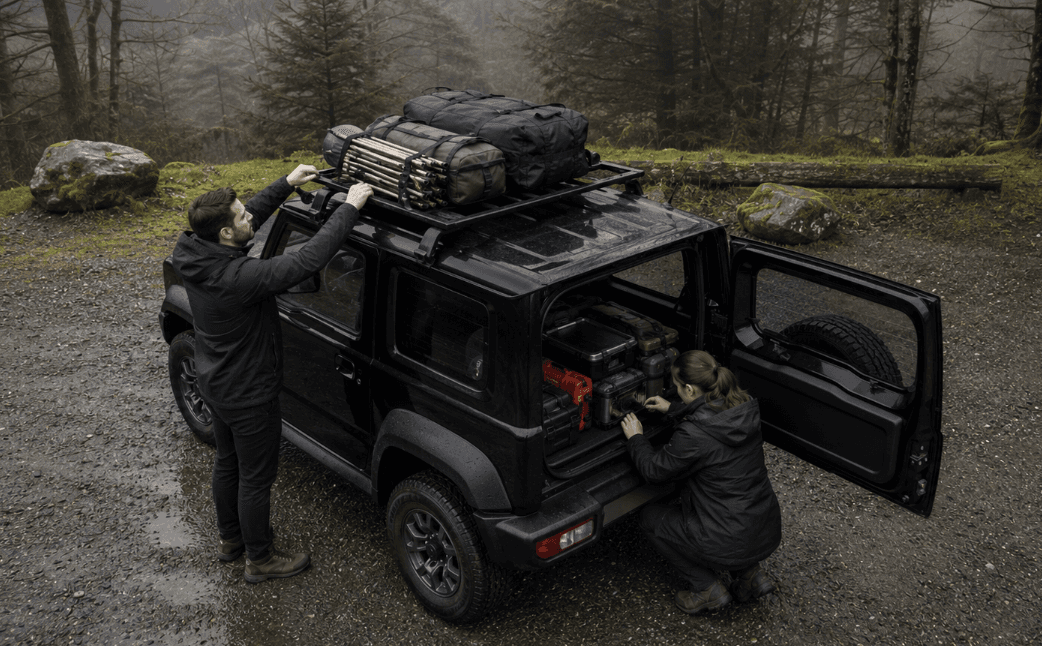
If you’re packing a Suzuki Jimny for a wet weekend in Wicklow or a longer run towards Connemara, roof space can look very tempting. But how much can you actually carry on a Jimny roof rack system?
For the current-generation three-door Jimny, Suzuki’s factory multi-roof-rack documentation gives a maximum roof load of 30 kg. This official roof load limit is crucial to observe for safe driving and vehicle longevity.
Crucially, that figure includes the weight of the rack, load bars or roof bars, mounting feet, and any other carrier modules—not just the bags or camping equipment placed on top.
That’s the number to work from unless the documentation for your exact model, year, and market states otherwise. A rack advertised to hold 100 kg or 150 kg doesn’t increase the Jimny’s own roof-load limit.
Jimny Roof Load Capacity at a Glance
For the current-generation three-door Jimny, the maximum roof load with Suzuki’s factory roof rails and roof rack system is 30 kg. This includes the factory bars, plastic roof rails (if fitted), crossbars, mounting brackets, roof platform, cargo boxes, carrier modules, and every item of cargo.
The 30 kg figure is a dynamic load limit, meaning it applies while the vehicle is moving. The vehicle manufacturer specifies this limit in the owners manual and vehicle specifications.
A static load rating refers to the weight the system can support while the Jimny is parked. This static load capacity is estimated around 150 kg to 200 kg. However, a higher static rating isn’t permission to exceed the dynamic limit while driving.
Always check the handbook and accessory instructions supplied with your exact Jimny before loading the roof. Note that exceeding the max roof load can affect your driving experience and vehicle stability.
How to Calculate What You Can Carry
The calculation is simple:
Usable roof payload = vehicle roof-load limit − rack and carrier weight
Imagine your Jimny roof rack and mounting hardware weigh 12 kg.
30 kg − 12 kg = 18 kg of usable payload
That 18 kg could cover a pair of lightweight camp chairs, soft bags, and compact recovery boards.
It won’t cover another 30 kg of equipment just because the rack itself has a higher rating.
We often see owners compare only the weight of their gear with the rack manufacturer’s headline capacity. The vehicle, rack, mounting points, and accessories form one system, and the lowest applicable limit is the one that matters.
Does the Rack’s Own Weight Count?
Yes. Every bracket, wind deflector, awning mount, shovel holder, and other attached accessories uses part of the Jimny's roof load capacity before you add any cargo.
This is why a light set of quality crossbars or load bars can be more useful than a large steel platform on a Jimny.
For example, ARB offers a full-size roof rack weighing approximately 17 kg, while roof bars weigh around 6 kg, allowing for lighter loads.
If a heavy roof rack system takes most of the 30 kg allowance, it may look expedition-ready while leaving very little sensible carrying capacity.
In our experience, the best Jimny accessories earn their place. Choose a setup around what you genuinely carry rather than fitting a full-length platform first and working backwards.
Securing and Distributing Roof Loads
Heavy items should be kept low and centered on the roof rack to maintain balance and vehicle stability.
Weight should be distributed evenly across the rack's mounting points, including rain gutters if used, to avoid undue stress on any one area.
Secure cargo with appropriate tie-down straps to prevent shifting, which can affect handling and safety.
Can You Fit a Jimny Roof Tent?
This is where static and dynamic load ratings are frequently confused.
A Jimny roof tent, such as a Front Runner runner tent or other brands, may be strong enough to hold two adults while the vehicle is parked. That’s a static situation, with the weight spread through the rack and mounting system.
Driving is different. Braking, cornering, potholes, and off-road bumps create much greater forces.
Most hard-shell and many soft-shell roof tents weigh more than 30 kg before crossbars or a platform are added. If the tent-and-rack combination exceeds the applicable dynamic roof limit, a higher static rating doesn’t make it suitable for road use.
Before buying a roof tent, check the roof-load limit for your exact Jimny model and year. You’ll also need to confirm the rack’s dynamic and static ratings, plus the tent’s packed weight with its ladder and mounting hardware included.
Don’t rely on a social-media build or an overseas supplier’s generic claim. Ask for written specifications, speak to your insurer, and have the complete setup checked by a competent fitter.
Using a roof tent can exceed the recommended weight limit and significantly affect vehicle stability.
Why Roof Weight Matters More on a Jimny
The Jimny is compact, relatively light, and narrow. That’s part of what makes it so enjoyable on tight Dublin streets, narrow Irish lanes, and technical trails.
It also means weight high above the cabin raises the vehicle’s centre of gravity, affecting stability.
You may notice more body movement in bends, a stronger reaction to crosswinds, and less settled responses during sudden steering or braking.
Driving with heavy roof loads can cause tipping risks and handling problems.
Irish weather adds another layer. A tall roof box meeting a gust on the M50, standing water on the N11, or a loaded rack moving over broken back roads can all make poor weight distribution more obvious.
For Jimny camping, keep dense items such as water, tools, and recovery equipment low inside the vehicle and properly restrained. Reserve the roof for lighter, bulkier gear.
On-Road and Off-Road Loads Aren’t the Same Experience
Thirty kilograms is a ceiling, not a target.
Rough ground repeatedly loads the rack, rain gutters, and fasteners as the vehicle pitches and rolls.
In our experience, a Jimny feels best off-road when its roof is kept as light as possible. Slow down on corrugations and forest tracks, recheck the fasteners after the first journey, and inspect the mounts for movement, cracking, or water ingress.
The same applies on the road.
Recheck straps at every stop, keep the load centred between the bars and don’t allow loose strap ends to flap. Nothing should obstruct your view, lights, or registration plate.
Insurance and Legal Considerations
Exceeding the roof load limit can affect vehicle stability and may lead to legal issues in Australia.
Insurance may not cover accidents caused by exceeding load limits.
Check your insurance policy carefully and inform your insurer about roof rack modifications and load configurations.

A Practical Jimny Camping Load Example
Imagine you start with lightweight load bars weighing 6 kg and add a compact cargo box weighing 10 kg.
You then pack 8 kg of sleeping bags and soft clothing, along with 4 kg of folding chairs.
The total roof load is 28 kg, slightly below the 30 kg limit.
Actual product weights vary, so weigh each component rather than relying on estimates.
Place cooking equipment, water containers, and tools low in the cabin. Secure internal luggage too—an emergency stop can turn an unsecured camping stove or recovery shackle into a serious hazard.
Common Jimny Roof Rack Mistakes
Treating the Rack Rating as the Vehicle Rating
A rack may be structurally rated for far more than the Jimny can carry dynamically. The higher number doesn’t replace Suzuki’s limit.
Forgetting Accessories and Brackets
Awning arms, light bars, storage boxes, and other Jimny accessories all add weight. Count every fitted component.
Loading Heavy Items at One End
Keep cargo low, evenly distributed, and centred. Follow the bar spacing and attachment instructions supplied by the manufacturer.
Leaving the Rack Fitted All Year
An empty rack still creates wind noise and aerodynamic drag.
If you only use it for summer Jimny camping trips, removing it between outings can make everyday driving quieter and more efficient.
Assuming an NCT Pass Approves the Setup
An NCT pass isn’t a substitute for following the vehicle and rack limits.
The carrier must be compatible, the load must be secure, and the relevant design capacities mustn’t be exceeded.
Tell your insurer about material modifications and keep your fitting instructions and receipts. If you’re unsure whether a particular conversion affects testing, registration, or insurance, get advice before fitting it.
What About Imported Jimnys in Ireland?
Specifications can vary by generation, body style, and market.
A Japanese-market Jimny, Jimny Sierra, older JB43, and five-door model shouldn’t automatically be treated as identical.
Check the vehicle’s handbook, identification details, and the instructions supplied with the approved rack.
For a five-door Jimny in particular, don’t assume the longer roof means a higher load capacity without model-specific manufacturer documentation.
That’s where buying through a specialist helps.
At The Jimny Co, we can find the right Jimny in Japan, inspect it before purchase, arrange shipping and manage VRT, registration, and warranty. We’ll also help you think through accessories before a build becomes unnecessarily heavy or impractical for Irish use.
Revenue’s VRT process and the NCT registration appointment are separate from roof-rack load safety, but they’re still important parts of bringing a Japanese Jimny onto Irish roads.
We handle the complete process, so you’re not left trying to join up auction records, transport, Revenue paperwork, and registration yourself.
We also offer finance options and accept trade-ins, making it easier to move into the right Jimny for your everyday driving and weekend plans.
Jimny Roof Rack FAQs
How Much Can You Carry on a Jimny Roof Rack?
For the current-generation three-door Jimny using Suzuki’s factory system, the stated maximum roof load is 30 kg, including the rack and other carrier modules.
Confirm the figure for your exact vehicle and equipment before loading.
Does the 30 kg Include the Jimny Roof Rack?
Yes. Subtract the weight of the rack, bars, brackets, and roof box from the total allowance to find the payload left for gear.
Can a Jimny Carry a Roof Tent?
Many roof tents exceed the Jimny’s stated dynamic roof-load limit once their mounting system is included.
A higher static rating while parked doesn’t make an overweight setup safe to drive. Check the written specifications for the vehicle, rack, and tent.
What Should Go on the Roof When Jimny Camping?
Light, bulky kit is the best candidate. Think sleeping bags, soft clothing, lightweight chairs, or an empty dry bag.
Keep water, tools, batteries, and other dense equipment low inside the vehicle and securely restrained.
Will a Roof Rack Affect the Way a Jimny Drives?
Yes. Roof weight raises the centre of gravity, while the rack and cargo add drag and can increase wind noise.
You’ll feel the difference most in crosswinds, bends, emergency manoeuvres, and on rough ground.
Planning a Jimny for Dublin weekdays and weekends away? We can help you choose the right model and accessories without compromising how it drives.
Thinking about a Jimny import? We handle it all—from Japan to Dublin. Contact The Jimny Co today.
Our Passion for Jimnys is backed by 35+ years of Suzuki Heritage.
The Jimny Co is a sub-brand of Gerry Caffrey Motors — Ireland’s longest-standing Suzuki dealership.
© The Jimny Co 2025
01 490 1134
106 - 112 Terenure Road North,
Dublin 6W, Ireland, D6WWR13